The use of AI to streamline drug discovery is exploding. Researchers are deploying machine-learning models to help them identify molecules, among billions of options, that might have the properties they are seeking to develop new medicines.
But there are so many variables to consider — from the price of materials to the risk of something going wrong — that even when scientists use AI, weighing the costs of synthesizing the best candidates is no easy task.
The myriad challenges involved in identifying the best and most cost-efficient molecules to test is one reason new medicines take so long to develop, as well as a key driver of high prescription drug prices.
To help scientists make cost-aware choices, MIT researchers developed an algorithmic framework to automatically identify optimal molecular candidates, which minimizes synthetic cost while maximizing the likelihood candidates have desired properties. The algorithm also identifies the materials and experimental steps needed to synthesize these molecules. Learn more
Researchers now employ artificial intelligence (AI) models based on deep learning to make functional predictions about big datasets. While the concepts behind these networks are well established, their inner workings are often invisible to the user. The emerging area of explainable AI (xAI) provides model interpretation techniques that empower life science researchers to uncover the underlying basis on which AI models make such predictions.
In this month’s episode, Deanna MacNeil from The Scientist spoke with Jim Collins from the Massachusetts Institute of Technology to learn how researchers are using explainable AI and artificial neural networks to gain mechanistic insights for large scale antibiotic discovery. Learn more
Since the 1970s, modern antibiotic discovery has been experiencing a lull. Now the World Health Organization has declared the antimicrobial resistance crisis as one of the top 10 global public health threats.
When an infection is treated repeatedly, clinicians run the risk of bacteria becoming resistant to the antibiotics. But why would an infection return after proper antibiotic treatment? One well-documented possibility is that the bacteria are becoming metabolically inert, escaping detection of traditional antibiotics that only respond to metabolic activity. When the danger has passed, the bacteria return to life and the infection reappears.
“Resistance is happening more over time, and recurring infections are due to this dormancy,” says Jackie Valeri, a former MIT-Takeda Fellow (centered within the MIT Abdul Latif Jameel Clinic for Machine Learning in Health) who recently earned her PhD in biological engineering from the Collins Lab. Valeri is the first author of a new paper published in this month’s print issue of Cell Chemical Biology that demonstrates how machine learning could help screen compounds that are lethal to dormant bacteria. Learn more
To engineer proteins with useful functions, researchers usually begin with a natural protein that has a desirable function, such as emitting fluorescent light, and put it through many rounds of random mutation that eventually generate an optimized version of the protein.
This process has yielded optimized versions of many important proteins, including green fluorescent protein (GFP). However, for other proteins, it has proven difficult to generate an optimized version. MIT researchers have now developed a computational approach that makes it easier to predict mutations that will lead to better proteins, based on a relatively small amount of data.
Using this model, the researchers generated proteins with mutations that were predicted to lead to improved versions of GFP and a protein from adeno-associated virus (AAV), which is used to deliver DNA for gene therapy. They hope it could also be used to develop additional tools for neuroscience research and medical applications.
“Protein design is a hard problem because the mapping from DNA sequence to protein structure and function is really complex. There might be a great protein 10 changes away in the sequence, but each intermediate change might correspond to a totally nonfunctional protein. It’s like trying to find your way to the river basin in a mountain range, when there are craggy peaks along the way that block your view. The current work tries to make the riverbed easier to find,” says Ila Fiete, a professor of brain and cognitive sciences at MIT, a member of MIT’s McGovern Institute for Brain Research, director of the K. Lisa Yang Integrative Computational Neuroscience Center, and one of the senior authors of the study.
Regina Barzilay, the School of Engineering Distinguished Professor for AI and Health at MIT, and Tommi Jaakkola, the Thomas Siebel Professor of Electrical Engineering and Computer Science at MIT, are also senior authors of an open-access paper on the work, which will be presented at the International Conference on Learning Representations in May. MIT graduate students Andrew Kirjner and Jason Yim are the lead authors of the study. Other authors include Shahar Bracha, an MIT postdoc, and Raman Samusevich, a graduate student at Czech Technical University. Learn more
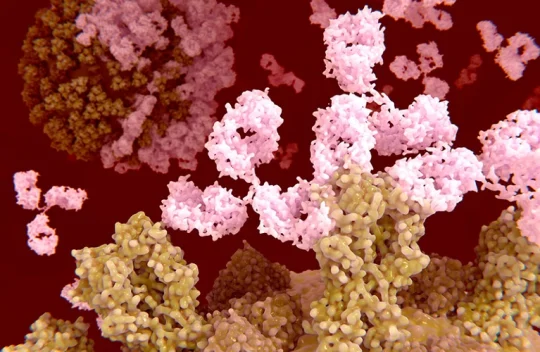
Researchers have used generative artificial intelligence (AI) to help them make completely new antibodies for the first time.
The proof-of-principle work, reported this week in a preprint on bioRxiv, raises the possibility of bringing AI-guided protein design to the therapeutic antibody market, which is worth hundreds of billions of dollars.
Antibodies — immune molecules that strongly attach to proteins implicated in disease — have conventionally been made using brute-force approaches that involve immunizing animals or screening vast numbers of molecules.
AI tools that can shortcut those costly efforts have the potential to “democratize the ability to design antibodies”, says study co-author Nathaniel Bennett, a computational biochemist at the University of Washington in Seattle. “Ten years from now, this is how we’re going to be designing antibodies.”
“It’s a really promising piece of research” that represents an important step in applying AI protein-design tools to making new antibodies, says Charlotte Deane, an immuno-informatician at the University of Oxford, UK. Learn more
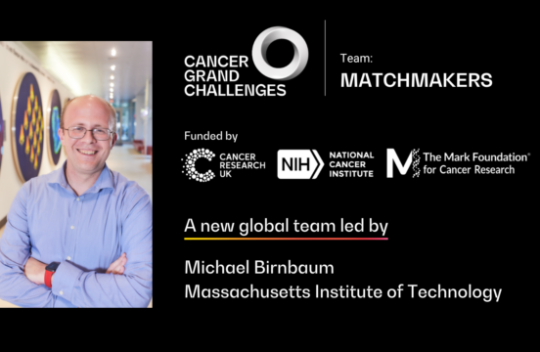
Cancer Grand Challenges recently announced five winning teams for 2024, which included five researchers from MIT: Michael Birnbaum, Regina Barzilay, Brandon DeKosky, Seychelle Vos, and Ömer Yilmaz. Each team is made up of interdisciplinary cancer researchers from across the globe and will be awarded $25 million over five years.
Birnbaum, an associate professor in the Department of Biological Engineering, leads Team MATCHMAKERS and is joined by co-investigators Barzilay, the School of Engineering Distinguished Professor for AI and Health in the Department of Electrical Engineering and Computer Science and the AI faculty lead at the MIT Abdul Latif Jameel Clinic for Machine Learning in Health; and DeKosky, Phillip and Susan Ragon Career Development Professor of Chemical Engineering. All three are also affiliates of the Koch Institute for Integrative Cancer Research At MIT. Learn more
The MATCHMAKERS team will embark on an ambitious research program to revolutionize TCR-pMHC pair prediction. Central to their approach is the integration of sequence and structure datasets, leveraging the group’s unique experience to merge these approaches into a unified pipeline. The team will curate new sequence and structure datasets scaled for advanced machine learning algorithms, develop novel experimental methods for data acquisition, and devise computational strategies addressing the nuances of TCR-pMHC binding and structure. The international and interdisciplinary group of investigators will combine data collected from natural TCR repertoires, datasets generated through molecular engineering strategies, structural and biochemical analysis, and the latest advances in artificial intelligence-based predictions and machine learning. Learn more