Happy New Year!

Learn more

MIT researchers introduce Boltz-1, a fully open-source model for predicting biomolecular structures

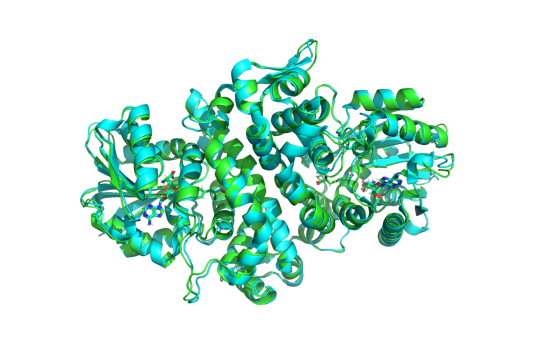
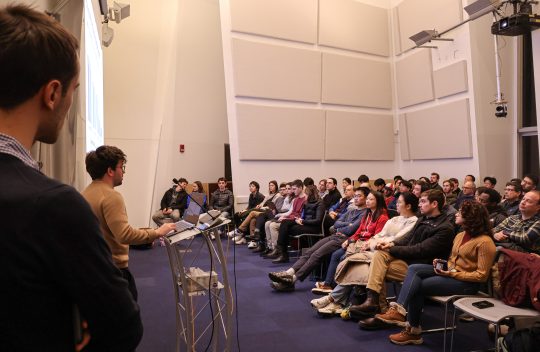
MIT scientists have released a powerful, open-source AI model, called Boltz-1, that could significantly accelerate biomedical research and drug development. Developed by a team of researchers in the MIT Jameel Clinic for Machine Learning in Health, Boltz-1 is the first fully open-source model that achieves state-of-the-art performance at the level of AlphaFold3, the model from Google DeepMind that predicts the 3D structures of proteins and other biological molecules. MIT graduate students Jeremy Wohlwend and Gabriele Corso were the lead developers of Boltz-1, along with MIT Jameel Clinic Research Affiliate Saro Passaro and MIT professors of electrical engineering and computer science Regina Barzilay and Tommi Jaakkola. Wohlwend and Corso presented the model at a Dec. 5 event at MIT’s Stata Center, where they said their ultimate goal is to foster global collaboration, accelerate discoveries, and provide a robust platform for advancing biomolecular modeling. Learn more
A new computational technique could make it easier to engineer useful proteins

To engineer proteins with useful functions, researchers usually begin with a natural protein that has a desirable function, such as emitting fluorescent light, and put it through many rounds of random mutation that eventually generate an optimized version of the protein.

This process has yielded optimized versions of many important proteins, including green fluorescent protein (GFP). However, for other proteins, it has proven difficult to generate an optimized version. MIT researchers have now developed a computational approach that makes it easier to predict mutations that will lead to better proteins, based on a relatively small amount of data.

Using this model, the researchers generated proteins with mutations that were predicted to lead to improved versions of GFP and a protein from adeno-associated virus (AAV), which is used to deliver DNA for gene therapy. They hope it could also be used to develop additional tools for neuroscience research and medical applications.

“Protein design is a hard problem because the mapping from DNA sequence to protein structure and function is really complex. There might be a great protein 10 changes away in the sequence, but each intermediate change might correspond to a totally nonfunctional protein. It’s like trying to find your way to the river basin in a mountain range, when there are craggy peaks along the way that block your view. The current work tries to make the riverbed easier to find,” says Ila Fiete, a professor of brain and cognitive sciences at MIT, a member of MIT’s McGovern Institute for Brain Research, director of the K. Lisa Yang Integrative Computational Neuroscience Center, and one of the senior authors of the study.

Regina Barzilay, the School of Engineering Distinguished Professor for AI and Health at MIT, and Tommi Jaakkola, the Thomas Siebel Professor of Electrical Engineering and Computer Science at MIT, are also senior authors of an open-access paper on the work, which will be presented at the International Conference on Learning Representations in May. MIT graduate students Andrew Kirjner and Jason Yim are the lead authors of the study. Other authors include Shahar Bracha, an MIT postdoc, and Raman Samusevich, a graduate student at Czech Technical University. Learn more
Load More