

Tag: Nature

What employers are looking for in the age of AI — and four ways to provide it
Artificial intelligence is becoming a must-have skill for both employers and funders. Data compiled by the jobs site Indeed show that, in the United States, science jobs listing ‘AI’ as a required skill are rising sharply, whereas the overall number of science jobs has fallen (see ‘AI in demand’).One example is the Quadram Institute in Norwich, UK, which specializes in food science and gut biology. Despite that core focus, researchers must show some knowledge of machine learning and AI, according to chief executive Daniel Figeys.
“Definitely they should be familiar with it,” he says, adding that a lot of work in Quadram’s field involves machine learning and high-throughput screening, the data from which are often analysed with AI tools. “If they were lacking all those skills, depending on the position, that would be a red flag.”
However, instead of worrying that AI systems will be taking science jobs, researchers can get ahead by using and interpreting AI tools to build their understanding. And they don’t need to know everything. Computer scientist Regina Barzilay runs a specialist course at the Massachusetts Institute of Technology (MIT) in Cambridge to teach scientists AI skills. She likens it to cooking: “You don’t need to learn every recipe on Earth to feel comfortable in the kitchen … but you need to have this very basic understanding,” she says, much like “you don’t need to be a computer scientist to use a computer.”
Nature spoke to nine recruiters and researchers to ask them what the most important skills will be for scientists of all kinds in the AI era. Learn more
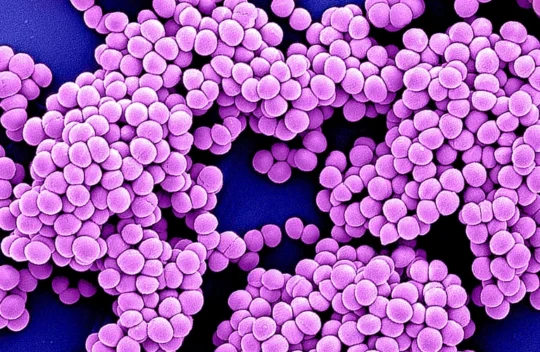
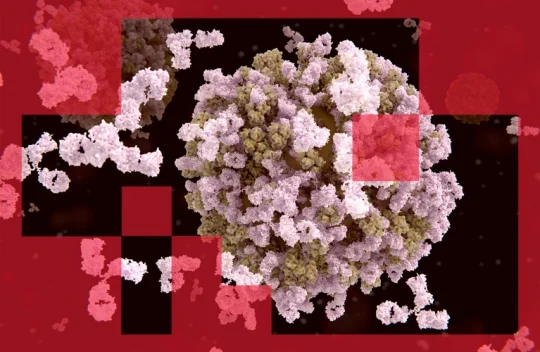
What will be the first AI-designed drug? These disease-fighting antibodies are top contenders
Antibodies — immune proteins that recognize foreign molecules, such as those made by pathogens, with exquisite specificity — have been a challenge for AI to design. AI models such as AlphaFold have struggled to predict the shape of flexible loop regions of antibodies, which they use to recognize their targets.But new tools developed in the past year — including an updated version of AlphaFold — have proved better at modelling these flexible regions, says Gabriele Corso, a machine-learning scientist at the Massachusetts Institute of Technology in Cambridge. Progress in antibody design has followed.
In October, Corso and his colleagues described the BoltzGen model in a preprint, showing that it can adroitly design ‘nanobodies’ — small, simple antibodies resembling molecules made by sharks and camels — against proteins implicated in cancer, viral and bacterial infections and other diseases. In most cases, the researchers identified antibodies with strong target binding after expressing just 15 of the most-promising designs in cells and testing them in laboratory experiments. However, the molecules were not tested in disease models. Learn more

ChatGPT one year on: who is using it, how and why?
On 30 November 2022, the technology company OpenAI released ChatGPT — a chatbot built to respond to prompts in a human-like manner. It has taken the scientific community and the public by storm, attracting one million users in the first 5 days alone; that number now totals more than 180 million. Seven researchers told Nature how it has changed their approach. Learn more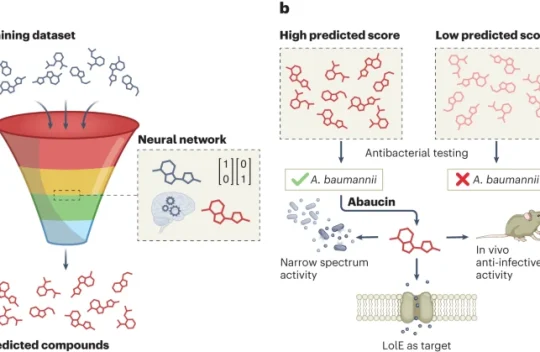
Antibiotic identified by AI
Computational approaches are emerging as powerful tools for the discovery of antibiotics. A study now uses machine learning to discover abaucin, a potent antibiotic that targets the bacterial pathogen Acinetobacter baumannii. Learn more