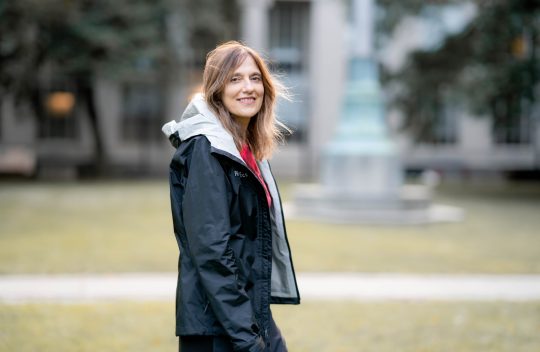
Sybil researchers pose for a photo in front of an CT scanner

MIT researchers develop an AI model that can detect future lung cancer risk

The name Sybil has its origins in the oracles of Ancient Greece, also known as sibyls: feminine figures who were relied upon to relay divine knowledge of the unseen and the omnipotent past, present, and future. Now, the name has been excavated from antiquity and bestowed on an artificial intelligence tool for lung cancer risk assessment being developed by researchers at MIT's Abdul Latif Jameel Clinic for Machine Learning in Health, Mass General Cancer Center (MGCC), and Chang Gung Memorial Hospital (CGMH). Learn more

MIT Jameel Clinic hosts regional convening on AI and healthcare in Dubai in partnership with UAE Artificial Intelligence Office

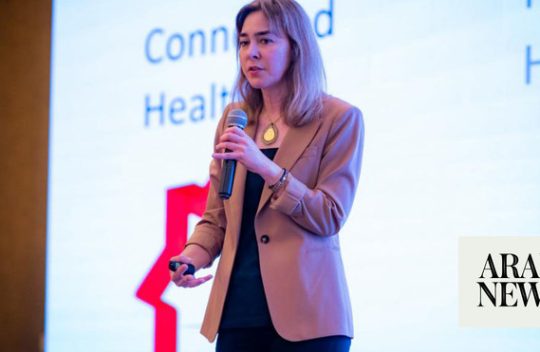
The Jameel Clinic, the epicentre of artificial intelligence (AI) in healthcare at the Massachusetts Institute of Technology (MIT), hosted today a one-day conference titled ‘AI Cures MENASA: Clinical AI and data solutions for health’, in partnership with the UAE Artificial Intelligence Office, Community Jameel, and Wellcome. Held at the Jameel Arts Centre in Dubai, the conference was attended by H.E. Omar Sultan Al Olama, UAE Minister for Artificial Intelligence, Digital Economy and Remote Work Applications, and brought together pioneers in AI and health from the Jameel Clinic, including MacArthur ‘genius grant’ Fellows Professor Regina Barzilay and Professor Dina Katabi, Dr Adam Yala and Dr Shrooq Alsenan, a Jameel Clinic research fellow from Saudi Arabia, together with representatives from major hospitals and public health agencies across the Middle East, North Africa, and South Asia (MENASA) region. The conference marks the first international venture of ‘AI Cures’, the Jameel Clinic’s platform for collaboration that launched in the early months of the COVID-19 pandemic. Learn more
A man lying down with an android standing next to him in a thinking pose with various anatomical diagrams in the background.

Artificial intelligence model can detect Parkinson’s from breathing patterns

Parkinson’s disease is notoriously difficult to diagnose as it relies primarily on the appearance of motor symptoms such as tremors, stiffness, and slowness, but these symptoms often appear several years after the disease onset. Now, Dina Katabi, the Thuan (1990) and Nicole Pham Professor in the Department of Electrical Engineering and Computer Science (EECS) at MIT and principal investigator at MIT Jameel Clinic, and her team have developed an artificial intelligence model that can detect Parkinson’s just from reading a person’s breathing patterns. Learn more

Is artificial intelligence about to transform the mammogram?

When Regina Barzilay returned to work after her breast cancer leave seven years ago, she was struck by an unexpected thought.

The MIT artificial-intelligence expert had just endured chemotherapy, two lumpectomies and radiation at Massachusetts General Hospital, and all the brutal side effects that come along with those treatments.

“I walked in the door to my office and thought, ‘We here at MIT are doing all this sophisticated algorithmic work that could have so many applications,’” Barzilay said. “‘And one subway stop away the people who could benefit from it are dying.’” Learn more

How an AI Scientist Turned Her Breast Cancer Diagnosis Into a Tool to Save Lives

When artificial intelligence researcher Regina Barzilay was first diagnosed with breast cancer in 2014, she says she was struck by immediate questions: “Am I going to survive? What’s going to happen to my son?” But soon, the Massachusetts Institute of Technology scientist began asking a broader one: Why couldn’t her cancer have been diagnosed earlier? Barzilay’s quest to find an answer would lead to a remarkable result: the development of an AI-based system for early detection of breast cancer, with the ability to predict whether a patient is likely to develop the disease in the next five years. A technology that had not yet penetrated the hospital setting now has the potential to save many thousands of lives each year. Learn more

Using A.I. to Transform Breast Cancer Care

How could a researcher in computer science improve future cancer care, I wondered, when a trip to Boston afforded me the opportunity to converse with Regina Barzilay, a professor at the Massachusetts Institute of Technology and the recipient in 2017 of a prestigious MacArthur Fellowship, known as a “genius grant.” After a breast cancer diagnosis in 2014, Dr. Barzilay, who has a doctorate in computer science, began directing her work in artificial intelligence toward helping other patients.

She and her team have developed algorithms to predict whether a patient is likely to develop breast cancer in the next five years. Their model is designed to spot the tiny changes on mammograms that turn into tumors. And it detects them regardless of the patient’s race, a significant concern in light of the racial divide in breast cancer mortality. Learn more