With many millions of Americans suffering from Alzheimer’s and dementia, cognitive decline is a major issue. The cost of dementia care is a rude awakening for many families, and patients experiencing the troubling symptoms of these difficulties might despair when they hear that there’s really no “cure,” just treatment.
One of the problems is that dementia can look a lot like other forms of cognitive decline, like milder senility. So part of the process is diagnosis.
We may not be able to cure dementia. But we can at least get help figuring out how to diagnose it with tools based on something called HCI.
What is HCI? It stands for ‘human-computer interaction’. In some ways, it’s pretty much what it sounds like – the study of users and their behaviors in using computers. But it’s also a form of cognitive engineering, and may give us a window into the human mind.
Looking at stylus-based interaction tasks, scientists are pondering quite a few metrics that reveal details on what people are thinking: eye fixation, blink rate, pupil size, etc.
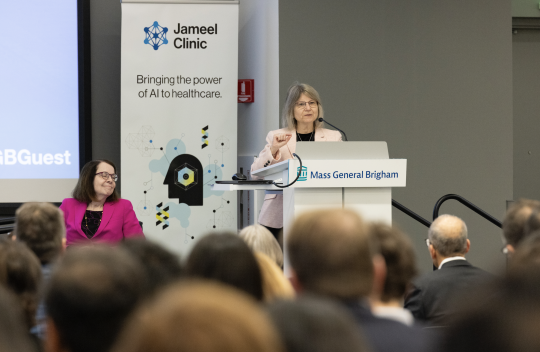
That in turn can help with the epidemic of cognitive impairment as we age (as presented by Randall Davis in this presentation. Davis also showed us some of the new technology coming down the pike). Learn more
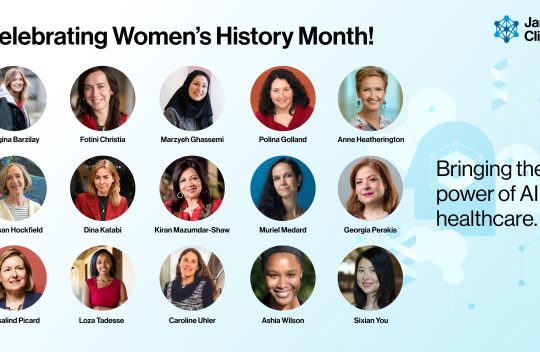
MIT Assistant Professor of EECS and Jameel Clinic Principal Investigator Marzyeh Ghassemi spoke with New York Times Opinion Contributor Maia Szalavitz on how the task of addiction prediction and prevention could potentially perpetuate biases in medical decision making. Learn more
For those in need of one, an organ transplant is a matter of life and death.
Every year, the medical procedure gives thousands of people with advanced or end-stage diseases extended life. This “second chance” is heavily dependent on the availability, compatibility, and proximity of a precious resource that can’t be simply bought, grown, or manufactured — at least not yet.
Instead, organs must be given — cut from one body and implanted into another. And because living organ donation is only viable in certain cases, many organs are only available for donation after the donor’s death.
Unsurprisingly, the logistical and ethical complexity of distributing a limited number of transplant organs to a growing wait list of patients has received much attention. There’s an important part of the process that has received less focus, however, and which may hold significant untapped potential: organ procurement itself. Learn more
Can we harness the power of artificial intelligence to solve the world’s most challenging problems without creating an uncontrollable force that ultimately destroys us? ChatGPT and other new A.I. tools can now answer complex questions, write essays, and generate realistic-looking images in a matter of seconds. They can even pass a lawyer’s bar exam. Should we celebrate? Or worry? Or both? Correspondent Miles O’Brien investigates how researchers are trying to transform the world using A.I., hunting for big solutions in fields from medicine to climate change. (Premiering March 27 at 9 pm on PBS)Learn more
HARTFORD — Hartford HealthCare is launching a new center dedicated to using artificial intelligence in healthcare, which officials said is the first in New England and one of a few in the United States.
The goal of using AI in a hospital system is to create more equitable and affordable healthcare, Jeffrey Flaks, president and chief executive officer of Hartford HealthCare, said at a press conference announcing the launch this week.
"Artificial intelligence is ubiquitous in healthcare," Flaks said. "It has the potential to impact all aspects of our operations, but our focus is to make healthcare more accessible, more affordable, to make it more equitable and to make it better."
Some of the research initiatives using AI include predicting COVID-19 spikes, how long someone might stay at the hospital, how a patient's condition might worsen, if a secondary stroke might happen and the outcomes of different surgeries. It can also be used in scheduling to make the hospital more efficient, officials said.
The Center for AI Innovation in Healthcare comes from a nearly decade-long, ongoing international collaboration between Hartford HealthCare, the Massachusetts Institute of Technology and the University of Oxford.
"To advance ourselves from being one of the earliest early adapters, to now being a co-developer, inventor and creator, and to be a pioneer in artificial intelligence, gives us the opportunity to truly impact how we deliver healthcare," Flaks said.
Through the collaborations, Hartford HealthCare Innovation developed Holistic Hospital Optimization, nicknamed H2O, which uses AI to help make hospital operations more efficient, including scheduling staff and operating rooms, as well as predicting how long a patient will stay, officials said.
The AI system follows a Holistic AI in Medicine framework, Dimitris Bertsimas, associate dean of analytics at MIT-Sloan, said at the press conference. It analyzes data hospitals collect, such as tabular data and images, which can then be applied "in a real-world environment in high-quality healthcare."
Flaks said that by minimizing administrative tasks, the medical staff can feel supported and have their attention be on patients.
Learn more