3 lessons from the biotech revolution that can shape U.S. innovation today 

Nobel-Prize-winning scientist Phil Sharp could have easily never come to discover RNA splicing, which launched the biotechnology revolution, in 1977. In many ways, the odds were stacked against him: He grew up on a farm in rural Kentucky, he struggled with dyslexia, and neither of his parents had attended college.

Still, his parents encouraged him to go to college, and he saved money for tuition from raising cattle and selling tobacco. Sharp’s grit, combined with an innovation ecosystem in the U.S. that invested in science, created the environment that led to a triumph not just for Sharp, but also America’s ability to innovate, according to Youseph Yazdi, assistant professor and executive director of the Center for Bioengineering Innovation & Design at Johns Hopkins University.

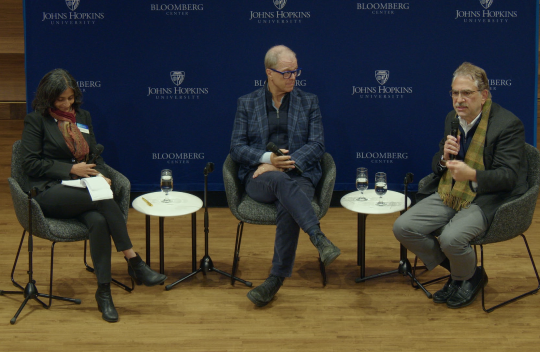
At a recent screening of the documentary Cracking the Code: Phil Sharp and the Biotech Revolution, Yazdi and the film’s director, Bill Haney, discussed the key lessons from this breakthrough that can inform the way the U.S. approaches innovation in a new era of great power competition. Learn more
What will be the first AI-designed drug? These disease-fighting antibodies are top contenders

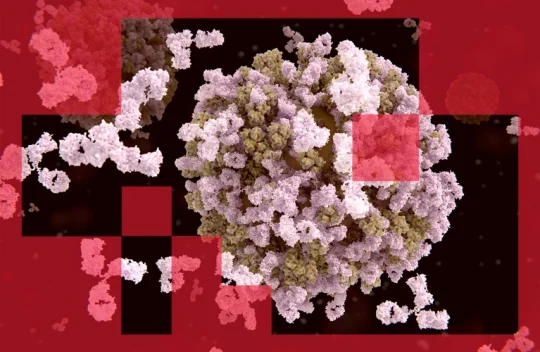
Antibodies — immune proteins that recognize foreign molecules, such as those made by pathogens, with exquisite specificity — have been a challenge for AI to design. AI models such as AlphaFold have struggled to predict the shape of flexible loop regions of antibodies, which they use to recognize their targets.

But new tools developed in the past year — including an updated version of AlphaFold — have proved better at modelling these flexible regions, says Gabriele Corso, a machine-learning scientist at the Massachusetts Institute of Technology in Cambridge. Progress in antibody design has followed.

In October, Corso and his colleagues described the BoltzGen model in a preprint, showing that it can adroitly design ‘nanobodies’ — small, simple antibodies resembling molecules made by sharks and camels — against proteins implicated in cancer, viral and bacterial infections and other diseases. In most cases, the researchers identified antibodies with strong target binding after expressing just 15 of the most-promising designs in cells and testing them in laboratory experiments. However, the molecules were not tested in disease models. Learn more

MIT scientists debut a generative AI model that could create molecules addressing hard-to-treat diseases

More than 300 people across academia and industry spilled into an auditorium to attend a BoltzGen seminar on Thursday, Oct. 30, hosted by the Abdul Latif Jameel Clinic for Machine Learning in Health (MIT Jameel Clinic). Headlining the event was MIT PhD student and BoltzGen’s first author Hannes Stärk, who had announced BoltzGen just a few days prior. Learn more

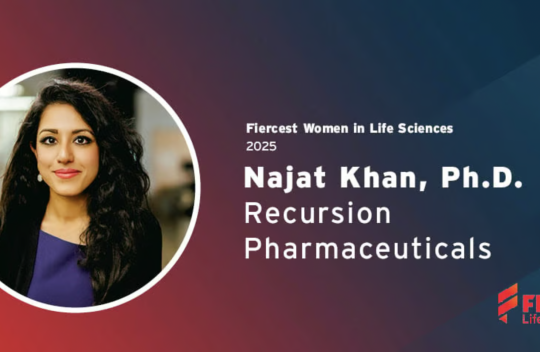
2025’s Fiercest Women in Life Sciences

The life sciences mission of Najat Khan, Ph.D., was forged in hospital hallways.
Her parents, a trauma surgeon and a gynecologist-turned-radiologist, “didn't believe in babysitters,” she joked in an interview. The extensive time she therefore spent in hospitals throughout her childhood showed Khan the life-changing impact of innovative medicines and set her on the path to the C-suites of Johnson & Johnson and Recursion Pharmaceuticals. Learn more

Marketwatch25: She survived breast cancer. Now her AI tool could help you skip annual mammograms.

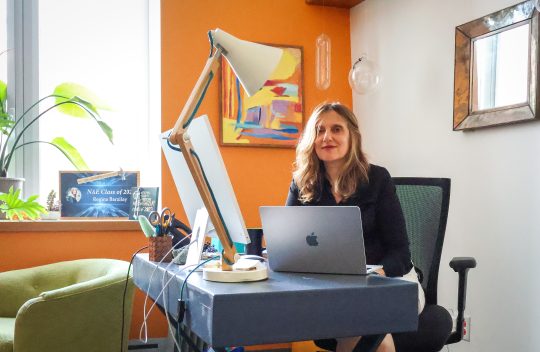
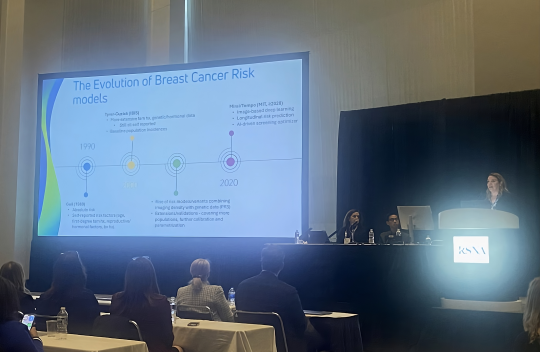
As an MIT computer-science professor, Regina Barzilay was used to living on the bleeding edge of innovation, teaching computers to understand words in the nascent field of natural language processing. But when she was diagnosed with breast cancer in 2014, she was thrust into a different and, as she describes it, “really backwards” technological world. Learn more

AI steps in to detect the world’s deadliest infectious disease

As a professor and computer scientist at MIT, Regina Barzilay has spent years building AI models to detect breast cancer and lung cancer. Then, when a hospital in Sri Lanka told her it couldn't afford to buy off-the-shelf AI models for TB screenings, she agreed to build one for them.

As she got to work this past year, she says, she immediately understood why TB is at the vanguard of the global health challenges with AI solutions.

"You can see TB. TB is visual. You have an x-ray. You have a label which says whether they have it or not — and you just train the model," Barzilay says, adding that it only took her a few months and less than $50,000 to make her model. "It's straightforward, very cheap, very fast to develop." Learn more
Load More