With many millions of Americans suffering from Alzheimer’s and dementia, cognitive decline is a major issue. The cost of dementia care is a rude awakening for many families, and patients experiencing the troubling symptoms of these difficulties might despair when they hear that there’s really no “cure,” just treatment.
One of the problems is that dementia can look a lot like other forms of cognitive decline, like milder senility. So part of the process is diagnosis.
We may not be able to cure dementia. But we can at least get help figuring out how to diagnose it with tools based on something called HCI.
What is HCI? It stands for ‘human-computer interaction’. In some ways, it’s pretty much what it sounds like – the study of users and their behaviors in using computers. But it’s also a form of cognitive engineering, and may give us a window into the human mind.
Looking at stylus-based interaction tasks, scientists are pondering quite a few metrics that reveal details on what people are thinking: eye fixation, blink rate, pupil size, etc.
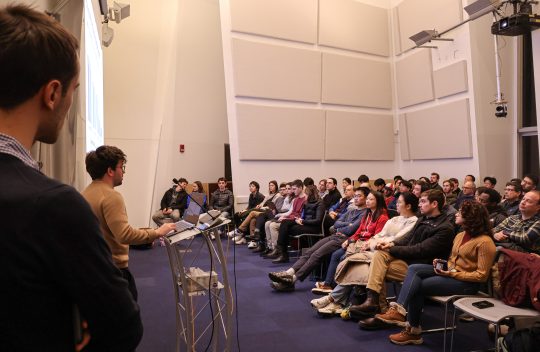
That in turn can help with the epidemic of cognitive impairment as we age (as presented by Randall Davis in this presentation. Davis also showed us some of the new technology coming down the pike). Learn more
The use of AI to streamline drug discovery is exploding. Researchers are deploying machine-learning models to help them identify molecules, among billions of options, that might have the properties they are seeking to develop new medicines.
But there are so many variables to consider — from the price of materials to the risk of something going wrong — that even when scientists use AI, weighing the costs of synthesizing the best candidates is no easy task.
The myriad challenges involved in identifying the best and most cost-efficient molecules to test is one reason new medicines take so long to develop, as well as a key driver of high prescription drug prices.
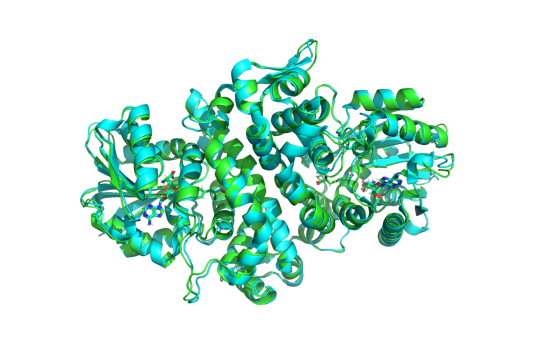
To help scientists make cost-aware choices, MIT researchers developed an algorithmic framework to automatically identify optimal molecular candidates, which minimizes synthetic cost while maximizing the likelihood candidates have desired properties. The algorithm also identifies the materials and experimental steps needed to synthesize these molecules. Learn more
MIT Assistant Professor of EECS and Jameel Clinic Principal Investigator Marzyeh Ghassemi spoke with New York Times Opinion Contributor Maia Szalavitz on how the task of addiction prediction and prevention could potentially perpetuate biases in medical decision making. Learn more
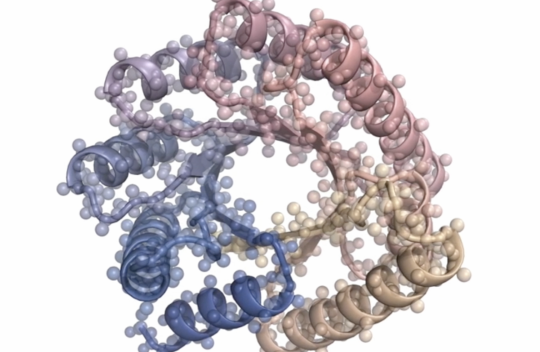
Researchers now employ artificial intelligence (AI) models based on deep learning to make functional predictions about big datasets. While the concepts behind these networks are well established, their inner workings are often invisible to the user. The emerging area of explainable AI (xAI) provides model interpretation techniques that empower life science researchers to uncover the underlying basis on which AI models make such predictions.
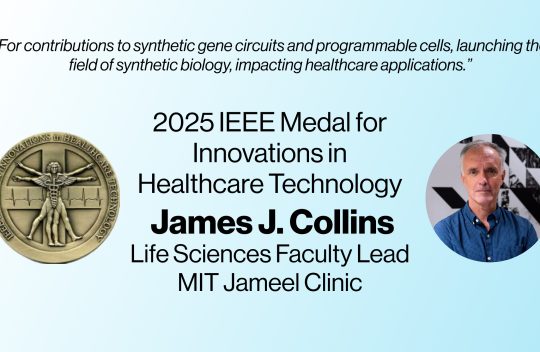
In this month’s episode, Deanna MacNeil from The Scientist spoke with Jim Collins from the Massachusetts Institute of Technology to learn how researchers are using explainable AI and artificial neural networks to gain mechanistic insights for large scale antibiotic discovery. Learn more
For those in need of one, an organ transplant is a matter of life and death.
Every year, the medical procedure gives thousands of people with advanced or end-stage diseases extended life. This “second chance” is heavily dependent on the availability, compatibility, and proximity of a precious resource that can’t be simply bought, grown, or manufactured — at least not yet.
Instead, organs must be given — cut from one body and implanted into another. And because living organ donation is only viable in certain cases, many organs are only available for donation after the donor’s death.
Unsurprisingly, the logistical and ethical complexity of distributing a limited number of transplant organs to a growing wait list of patients has received much attention. There’s an important part of the process that has received less focus, however, and which may hold significant untapped potential: organ procurement itself. Learn more
Since the 1970s, modern antibiotic discovery has been experiencing a lull. Now the World Health Organization has declared the antimicrobial resistance crisis as one of the top 10 global public health threats.
When an infection is treated repeatedly, clinicians run the risk of bacteria becoming resistant to the antibiotics. But why would an infection return after proper antibiotic treatment? One well-documented possibility is that the bacteria are becoming metabolically inert, escaping detection of traditional antibiotics that only respond to metabolic activity. When the danger has passed, the bacteria return to life and the infection reappears.
“Resistance is happening more over time, and recurring infections are due to this dormancy,” says Jackie Valeri, a former MIT-Takeda Fellow (centered within the MIT Abdul Latif Jameel Clinic for Machine Learning in Health) who recently earned her PhD in biological engineering from the Collins Lab. Valeri is the first author of a new paper published in this month’s print issue of Cell Chemical Biology that demonstrates how machine learning could help screen compounds that are lethal to dormant bacteria. Learn more