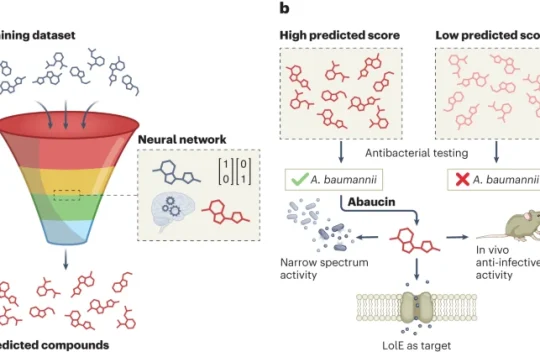
Computational approaches are emerging as powerful tools for the discovery of antibiotics. A study now uses machine learning to discover abaucin, a potent antibiotic that targets the bacterial pathogen Acinetobacter baumannii. Learn more
An inconspicuous box sits beside the Wi-Fi router, silently humming its own much-lower-energy radio waves through the house. The patient—who has a family history of Parkinson’s disease—makes dinner, watches TV, and falls asleep. Nothing amiss. Learn more
Although computer scientists may initially treat data bias and error as a nuisance, researchers argue it’s a hidden treasure trove for reflecting societal values.
Learn more
How AI is changing the manner in which cardiovascular illness is diagnosed. And the future is unfolding before us with new predictive analytics, remote monitoring and precision medicine. Dr. Stultz is both a Ph.D. in Computer Science as well as a Cardiologist and brings both fields of practice together in a unique fashion. Learn more
President Yoon Suk Yeol of South Korea visited MIT on Friday, participating in a roundtable discussion with Institute leaders and faculty about biomedical research and discussing the fundamentals of technology-driven innovation clusters. Learn more
Researchers in Boston are on the verge of what they say is a major advancement in lung cancer screening: Artificial intelligence that can detect early signs of the disease years before doctors would find it on a CT scan.
The new AI tool, called Sybil, was developed by scientists at the Mass General Cancer Center and the Massachusetts Institute of Technology in Cambridge. In one study, it was shown to accurately predict whether a person will develop lung cancer in the next year 86% to 94% of the time. Learn more