

Santa Casa Approves Clinical Trial for MIT-Developed Breast Cancer Risk AI Model
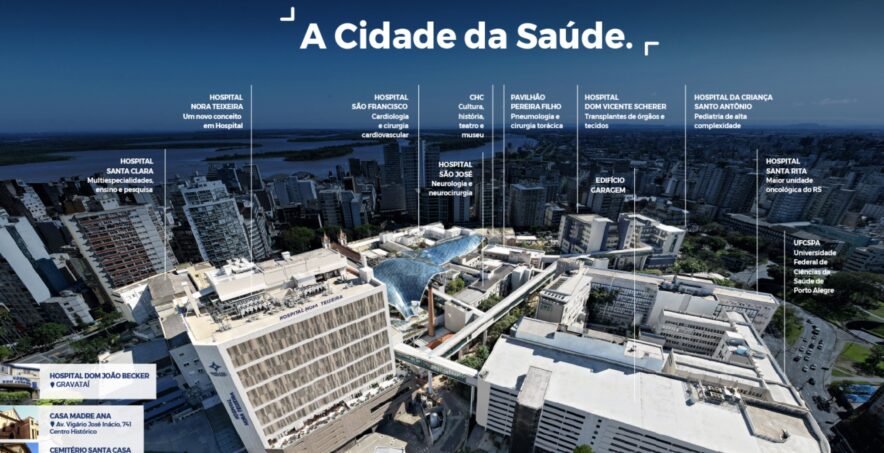
Two years ago, the Jameel Clinic and Santa Casa Hospital in Porto Alegro, Brazil entered a collaboration to bring Mirai, a deep learning model that predicts five year breast cancer risk, to women in the South of Brazil. Last week, the hospital announced that it had received approval from the Santa Casa Research Ethics Committee to begin clinical trials for Mirai.
Affiliated with the Federal University of Rio Grande do Sul, Santa Casa Hospital is the largest teaching hospital in Porto Alegre and one of Brazil’s top public hospitals that is part of Sistema Único de Saúde (SUS), Brazil’s healthcare system, which happens to be the world’s largest public healthcare system. With 741 beds and nine hospital complexes, the hospital receives over six million patients on an annual basis.
“Reaching this stage is incredibly meaningful for our team,” says Carmela Farias da Silva, PhD, a study coordinator at Santa Casa Hospital. “Over the past two years, we worked closely with PROCEMPA to adapt and validate the model using our own patient population, which led to the scientific publication of our retrospective study.”
After the publication of this retrospective study, which was published earlier this year in the Brazilian Journal of Oncology, the hospital is ready to move forward with a prospective trial with around 500 participants.
“Seeing this work evolve into a prospective clinical trial is both exciting and a great responsibility,” Farias da Silva adds. “As a public hospital within Brazil’s Sistema Único de Saúde, we are constantly challenged to do more with limited resources, so being able to bring an innovation like this into our reality has the potential to make a real difference—especially in improving early detection and expanding access to quality care for our patients.”
According to Marcio Gusmão Scherer, Head of Architecture and Innovation at PROCEMPA, the collaboration began after coming across the 2022 paper “Multi-Institutional Validation of a Mammography-Based Breast Cancer Risk Model” co-authored by Jameel Clinic research affiliate Adam Yala (then a graduate student at MIT) and Jameel Clinic AI faculty lead Regina Barzilay.
“We found the results truly remarkable and reached out to MIT to explore the possibility of bringing this technology to our population,” recalls Gusmão Scherer, adding that the collaboration grew from a shared vision of bringing cutting-edge AI into real-world public healthcare.
“Over the past two years, working side-by-side with Santa Casa and the MIT Jameel Clinic, we’ve focused not only on validating the technology, but on ensuring it fits the realities of our healthcare system,” he says. “We’re optimistic about improving early cancer detection and, most importantly, helping save lives.”
Breast cancer is the most common cancer amongst women in Brazil. According to a paper recently published in Nature Scientific Reports, the Southeast and South regions of Brazil generally report higher breast cancer mortality rates.
“We are excited to see the progress Marcio and Carmela have made in the past two years at Santa Casa as part of our Hospital Network,” says Ignacio Fuentes, Executive Director of the MIT Jameel Clinic “We look forward to supporting them in their efforts to bring breast cancer risk assessment to the Brazilian population and hope that this can inspire medical centers around the world to begin validating AI tools that have real potential to save patient lives.”
