

Tag: Regina Barzilay

One Survivor’s AI Breakthrough Predicts Cancer Years Ahead
AI Decoded focusses on one of the most urgent, tangible uses of artificial intelligence: health care — we speak to Dr Regina Barzilay, an MIT professor who is building machine-learning AI models to predict disease. She herself was diagnosed with breast cancer in 2014, and has used that experience and knowledge to target her research towards prevention — the AI model she and her team built, named MIRAI, is now able to detect a patient’s risk of developing breast cancer within five years. Are we on the brink of a revolution in treating cancer for everyone? Find out on AI Decoded... Joining presenter Christian Fraser is AI Decoded co-host Stephanie Hare and the BBC's AI correspondent Marc Cieslak Learn moreMIT scientists debut a generative AI model that could create molecules addressing hard-to-treat diseases
More than 300 people across academia and industry spilled into an auditorium to attend a BoltzGen seminar on Thursday, Oct. 30, hosted by the Abdul Latif Jameel Clinic for Machine Learning in Health (MIT Jameel Clinic). Headlining the event was MIT PhD student and BoltzGen’s first author Hannes Stärk, who had announced BoltzGen just a few days prior. Learn more
Marketwatch25: She survived breast cancer. Now her AI tool could help you skip annual mammograms.
As an MIT computer-science professor, Regina Barzilay was used to living on the bleeding edge of innovation, teaching computers to understand words in the nascent field of natural language processing. But when she was diagnosed with breast cancer in 2014, she was thrust into a different and, as she describes it, “really backwards” technological world. Learn more
AI steps in to detect the world’s deadliest infectious disease
As a professor and computer scientist at MIT, Regina Barzilay has spent years building AI models to detect breast cancer and lung cancer. Then, when a hospital in Sri Lanka told her it couldn't afford to buy off-the-shelf AI models for TB screenings, she agreed to build one for them.As she got to work this past year, she says, she immediately understood why TB is at the vanguard of the global health challenges with AI solutions.
"You can see TB. TB is visual. You have an x-ray. You have a label which says whether they have it or not — and you just train the model," Barzilay says, adding that it only took her a few months and less than $50,000 to make her model. "It's straightforward, very cheap, very fast to develop." Learn more
AI maps how a new antibiotic targets gut bacteria
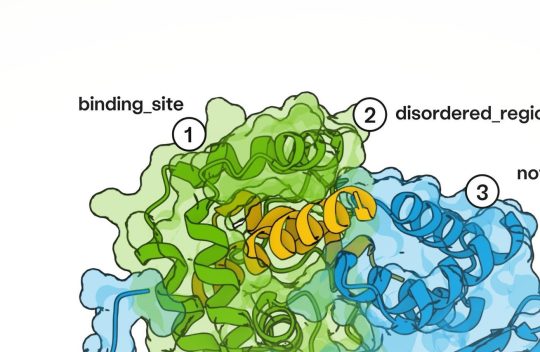
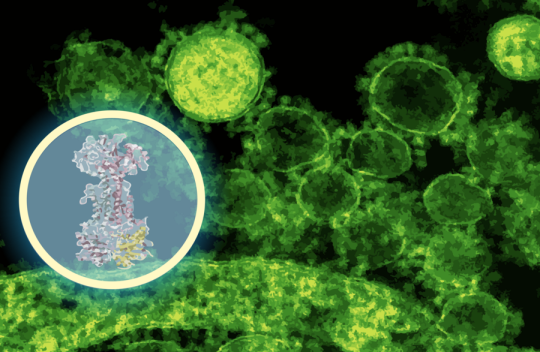
“This discovery speaks to a central challenge in antibiotic development,” says Jon Stokes, senior author of a new paper on the work, assistant professor of biochemistry and biomedical sciences at McMaster, and research affiliate at MIT’s Abdul Latif Jameel Clinic for Machine Learning in Health. “The problem isn’t finding molecules that kill bacteria in a dish — we’ve been able to do that for a long time. A major hurdle is figuring out what those molecules actually do inside bacteria. Without that detailed understanding, you can’t develop these early-stage antibiotics into safe and effective therapies for patients.” Learn more
MIT researchers develop AI tool to improve flu vaccine strain selection
Every year, global health experts are faced with a high-stakes decision: Which influenza strains should go into the next seasonal vaccine? The choice must be made months in advance, long before flu season even begins, and it can often feel like a race against the clock. If the selected strains match those that circulate, the vaccine will likely be highly effective. But if the prediction is off, protection can drop significantly, leading to (potentially preventable) illness and strain on health care systems. Learn more
TIME100 AI 2025
Regina Barzilay is in the business of patient future-telling. That is, using machine learning AI models to predict disease—including when and how it will strike, along with how it may behave. Barzilay began pursuing this after being diagnosed with breast cancer in 2014. As a patient, she experienced the frustrating uncertainty surrounding individual prognoses. Her questions about treatments were often answered in reference to what happened to the participants of clinical trials, but she felt those answers gave her little information about her individual situation.As an AI researcher, she knew how to address that uncertainty. “To me it was quite clear,” she says, “That's what machine learning is about.” A decade later, the AI model she and her team built, named MIRAI, is able to detect a patient’s risk of developing breast cancer within five years. By 2025, MIRAI was validated by over 2 million mammograms in 48 hospitals across 22 countries.
And her future-telling continues. In 2024, Barzilay worked on an AI model that estimates the expected effectiveness of candidate flu vaccines by predicting which versions of the flu virus are likely to spread next season. She’s now working on using the same concept on cancer, in order to predict how patients—particularly with advanced cancers—will react to a specific treatment. “We are constantly running behind the disease,” she says. “The idea here is to be able to predict it.” Learn more
