

Tag: MRSA
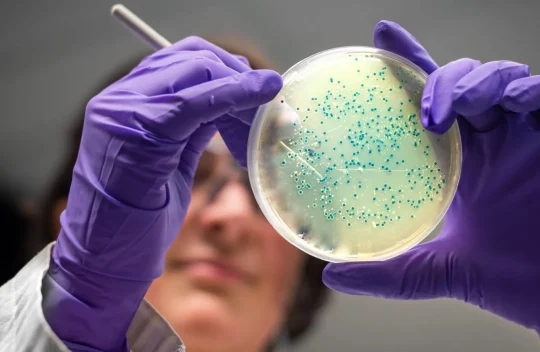
AI designs antibiotics for gonorrhoea and MRSA superbugs
Artificial intelligence has invented two new potential antibiotics that could kill drug-resistant gonorrhoea and MRSA, researchers have revealed.The drugs were designed atom-by-atom by the AI and killed the superbugs in laboratory and animal tests.
The two compounds still need years of refinement and clinical trials before they could be prescribed.
But the Massachusetts Institute of Technology (MIT) team behind it say AI could start a "second golden age" in antibiotic discovery. Learn more

AI used to design antibiotics that can combat drug-resistant superbugs gonorrhoea and MRSA
A team at Massachusetts Institute of Technology (MIT) used generative AI algorithms to design more than 36 million possible compounds. They also seemed to work in a new way - by disrupting bacterial cell membranes.Antibiotics kill bacteria, but some infections have become resistant to drugs.
It is estimated that drug-resistant bacterial infections cause nearly five million deaths per year worldwide.
Two compounds were found to be effective against gonorrhoea and MRSA infections - namely NG1 and DN1, respectively. Learn more
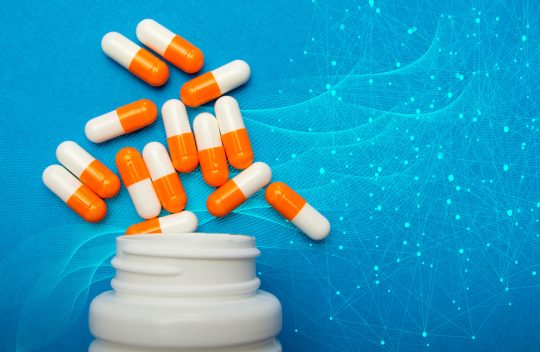
Using generative AI, researchers design compounds that can kill drug-resistant bacteria
With help from artificial intelligence, MIT researchers have designed novel antibiotics that can combat two hard-to-treat infections: drug-resistant Neisseria gonorrhoeae and multi-drug-resistant Staphylococcus aureus (MRSA).Using generative AI algorithms, the research team designed more than 36 million possible compounds and computationally screened them for antimicrobial properties. The top candidates they discovered are structurally distinct from any existing antibiotics, and they appear to work by novel mechanisms that disrupt bacterial cell membranes.
This approach allowed the researchers to generate and evaluate theoretical compounds that have never been seen before — a strategy that they now hope to apply to identify and design compounds with activity against other species of bacteria.
“We’re excited about the new possibilities that this project opens up for antibiotics development. Our work shows the power of AI from a drug design standpoint, and enables us to exploit much larger chemical spaces that were previously inaccessible,” says James Collins, the Termeer Professor of Medical Engineering and Science in MIT’s Institute for Medical Engineering and Science (IMES) and Department of Biological Engineering. Learn more
Why Casey Left Substack, Elon Musk and Drugs, and an A.I. Antibiotic Discovery
Casey is taking his newsletter Platformer off Substack, as criticism over the company’s handling of pro-Nazi content grows. Then, The Wall Street Journal spoke with witnesses who said that Elon Musk had used LSD, cocaine, ecstasy and psychedelic mushrooms, worrying some directors and board members of his companies. And finally, how researchers found a new class of antibiotics with the help of an artificial intelligence algorithm used to win the board game Go.Today’s guests:
Kirsten Grind, enterprise reporter for The Wall Street Journal
Felix Wong, postdoctoral fellow at M.I.T. and co-founder of Integrated Biosciences
Additional Reading:
Why Platformer is leaving Substack.
Elon Musk has reportedly used illegal drugs, worrying leaders at Tesla and SpaceX.
Researchers have discovered a new class of antibiotics using A.I. Learn more
