

Tag: Lecia Sequist
The Future of Early Detection: New MIT AI Tool Predicts Lung Cancer Risk Years Before Tumors Appear
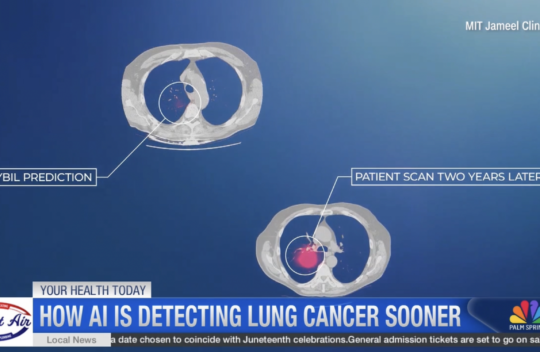
Lung cancer remains the primary cause of cancer-related deaths in the United States for both men and women. While early detection is critical for survival, a significant gap exists in current screening methods. A new artificial intelligence tool is now offering a window into the future, helping clinicians identify high-risk patients years before a tumor is visible on a scan. The Current Screening Gap Standard lung cancer screening currently involves a low-dose CT scan. However, data shows that only about 20 percent of eligible individuals actually undergo these checks. Furthermore, historical guidelines have been restrictive. Until recently, CT scans were typically warranted only for adults aged 50 to 80 with a heavy smoking history. This narrow criteria has meant that half of all people diagnosed with lung cancer in the United States every year would not have met the standard requirements for screening. A New Tool for Prediction Doctors at the Mass General Brigham Cancer Institute, in collaboration with engineers at MIT, have developed an AI tool called Sybil to address this disparity. Sybil is designed to analyze a single CT scan and generate a personalized risk score. This score predicts the likelihood of a person developing lung cancer over any period up to six years. Validation studies reported that Sybil is between 86 and 94 percent accurate in distinguishing between high-risk and low-risk patients within a one-year window. The technology achieves this through advanced pattern recognition. By training on tens of thousands of previous scans, the AI identifies biological signals and imaging patterns that are invisible to the human eye. Learn more
Using AI to predict lung cancer risk
In recent years, lung cancer rates have been rising in nonsmokers, a troubling trend for the world's #1 deadliest cancer. Sybil is a deep learning model built by MIT Jameel Clinic and Mass General Brigham researchers that accurately predicts lung cancer risk up to 6 years in advance by analyzing a patient's LDCT scan. How exactly does this state-of-the-art model work and what was the key insight that brought it to life? Watch this 7-minute video featuring the researchers behind the model to learn more about how Sybil is transforming the future of lung cancer screening. Learn more
A.I. Revolution
Can we harness the power of artificial intelligence to solve the world’s most challenging problems without creating an uncontrollable force that ultimately destroys us? ChatGPT and other new A.I. tools can now answer complex questions, write essays, and generate realistic-looking images in a matter of seconds. They can even pass a lawyer’s bar exam. Should we celebrate? Or worry? Or both? Correspondent Miles O’Brien investigates how researchers are trying to transform the world using A.I., hunting for big solutions in fields from medicine to climate change. (Premiering March 27 at 9 pm on PBS) Learn more
9 new breakthroughs in the fight against cancer
Lung cancer kills more people in the US yearly than the next three deadliest cancers combined. It's notoriously hard to detect the early stages of the disease with X-rays and scans alone. However, MIT scientists have developed an AI learning model to predict a person's likelihood of developing lung cancer up to six years in advance via a low-dose CT scan. Learn more
Promising new AI can detect early signs of lung cancer that doctors can’t see
Researchers in Boston are on the verge of what they say is a major advancement in lung cancer screening: Artificial intelligence that can detect early signs of the disease years before doctors would find it on a CT scan.The new AI tool, called Sybil, was developed by scientists at the Mass General Cancer Center and the Massachusetts Institute of Technology in Cambridge. In one study, it was shown to accurately predict whether a person will develop lung cancer in the next year 86% to 94% of the time. Learn more
MIT researchers develop an AI model that can detect future lung cancer risk
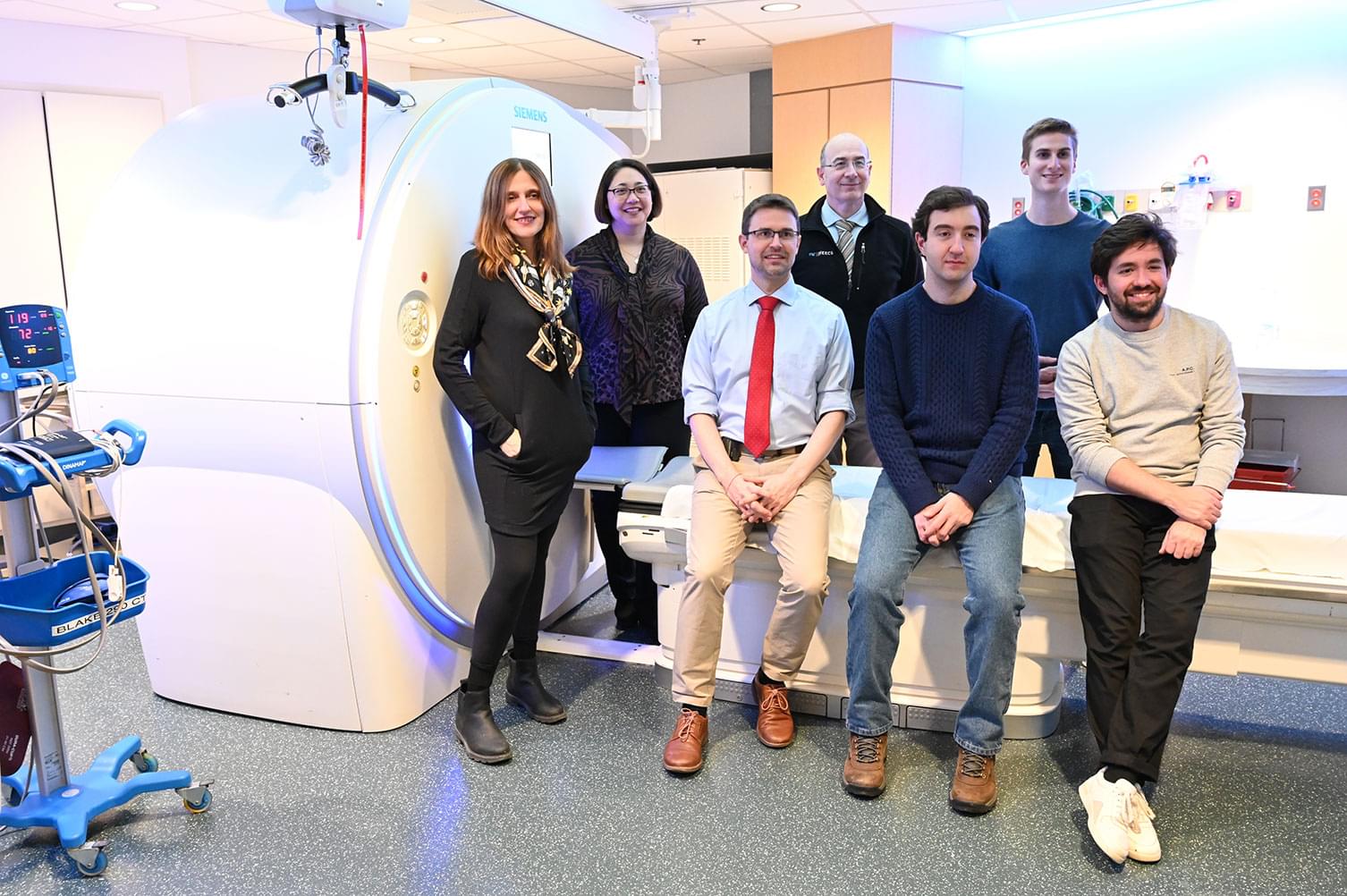
The name Sybil has its origins in the oracles of Ancient Greece, also known as sibyls: feminine figures who were relied upon to relay divine knowledge of the unseen and the omnipotent past, present, and future. Now, the name has been excavated from antiquity and bestowed on an artificial intelligence tool for lung cancer risk assessment being developed by researchers at MIT's Abdul Latif Jameel Clinic for Machine Learning in Health, Mass General Cancer Center (MGCC), and Chang Gung Memorial Hospital (CGMH). Learn more