Every year, global health experts are faced with a high-stakes decision: Which influenza strains should go into the next seasonal vaccine? The choice must be made months in advance, long before flu season even begins, and it can often feel like a race against the clock. If the selected strains match those that circulate, the vaccine will likely be highly effective. But if the prediction is off, protection can drop significantly, leading to (potentially preventable) illness and strain on health care systems. Learn more
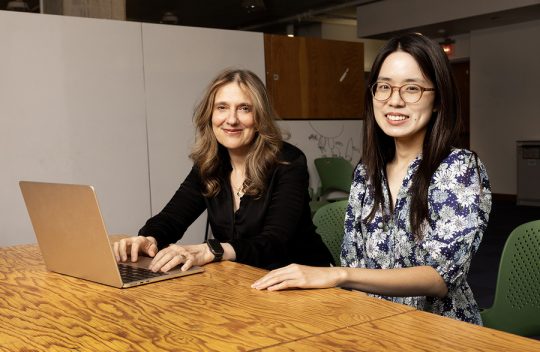
Regina Barzilay is in the business of patient future-telling. That is, using machine learning AI models to predict disease—including when and how it will strike, along with how it may behave. Barzilay began pursuing this after being diagnosed with breast cancer in 2014. As a patient, she experienced the frustrating uncertainty surrounding individual prognoses. Her questions about treatments were often answered in reference to what happened to the participants of clinical trials, but she felt those answers gave her little information about her individual situation.
As an AI researcher, she knew how to address that uncertainty. “To me it was quite clear,” she says, “That's what machine learning is about.” A decade later, the AI model she and her team built, named MIRAI, is able to detect a patient’s risk of developing breast cancer within five years. By 2025, MIRAI was validated by over 2 million mammograms in 48 hospitals across 22 countries.
And her future-telling continues. In 2024, Barzilay worked on an AI model that estimates the expected effectiveness of candidate flu vaccines by predicting which versions of the flu virus are likely to spread next season. She’s now working on using the same concept on cancer, in order to predict how patients—particularly with advanced cancers—will react to a specific treatment. “We are constantly running behind the disease,” she says. “The idea here is to be able to predict it.” Learn more
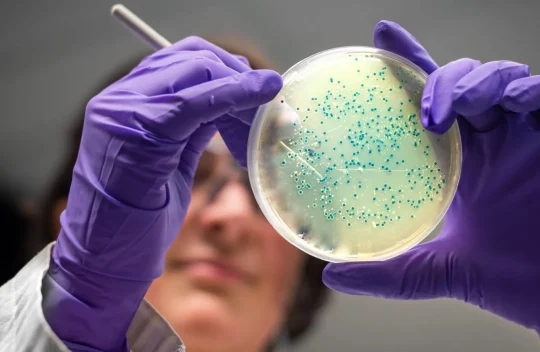
Artificial intelligence has invented two new potential antibiotics that could kill drug-resistant gonorrhoea and MRSA, researchers have revealed.
The drugs were designed atom-by-atom by the AI and killed the superbugs in laboratory and animal tests.
The two compounds still need years of refinement and clinical trials before they could be prescribed.
But the Massachusetts Institute of Technology (MIT) team behind it say AI could start a "second golden age" in antibiotic discovery. Learn more
A team at Massachusetts Institute of Technology (MIT) used generative AI algorithms to design more than 36 million possible compounds.
They also seemed to work in a new way - by disrupting bacterial cell membranes.
Antibiotics kill bacteria, but some infections have become resistant to drugs.
It is estimated that drug-resistant bacterial infections cause nearly five million deaths per year worldwide.
Two compounds were found to be effective against gonorrhoea and MRSA infections - namely NG1 and DN1, respectively. Learn more
With help from artificial intelligence, MIT researchers have designed novel antibiotics that can combat two hard-to-treat infections: drug-resistant Neisseria gonorrhoeae and multi-drug-resistant Staphylococcus aureus (MRSA).
Using generative AI algorithms, the research team designed more than 36 million possible compounds and computationally screened them for antimicrobial properties. The top candidates they discovered are structurally distinct from any existing antibiotics, and they appear to work by novel mechanisms that disrupt bacterial cell membranes.
This approach allowed the researchers to generate and evaluate theoretical compounds that have never been seen before — a strategy that they now hope to apply to identify and design compounds with activity against other species of bacteria.
“We’re excited about the new possibilities that this project opens up for antibiotics development. Our work shows the power of AI from a drug design standpoint, and enables us to exploit much larger chemical spaces that were previously inaccessible,” says James Collins, the Termeer Professor of Medical Engineering and Science in MIT’s Institute for Medical Engineering and Science (IMES) and Department of Biological Engineering. Learn more
In 2020, researchers at the Collins Lab at MIT made a landmark discovery when they used AI to identify a new class of antibiotics. Phare Bio was born from that breakthrough, and has since leveraged AI to uncover two additional novel antibiotic classes.
The company's model prioritizes the superbugs identified as the most dangerous by the CDC and the WHO, and predicts drug efficacy, toxicity and pharmacokinetics with high accuracy. Phare Bio has also developed AIBiotics, a generative AI platform that designs new antibiotics.
Ultimately, the company aims to improve the efficiency of antibiotic research and development, according to Dr. Akhila Kosaraju, its president and CEO.
How does it measure that? Ultimately, by "taking better and fewer shots on goal," Kosaraju told Newsweek. It often costs between $1.3 and $1.5 billion to get a single drug over the finish line for FDA approval.
"Those numbers are so high [because they] encompass all of the failures along the way to get to that one exceptional drug," Kosaraju said. "If we can reduce the number of shots on goal substantially, we can half or quarter the cost and time to get these drugs into clinical trials, and then ultimately to be FDA-approved."
To see the full list of AI Impact winners, visit the official page for Newsweek's AI Impact Awards. Learn more
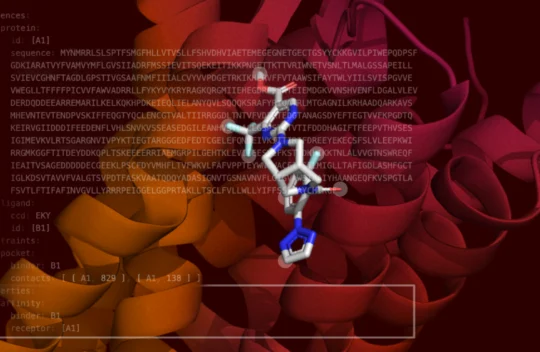
Researchers from the Massachusetts Institute of Technology (MIT) Jameel Clinic for Machine Learning in Health have announced the open-source release of Boltz-2, which now predicts molecular binding affinity at newfound speed and accuracy to democratize commercial drug discovery. The model is available under the highly permissive MIT license, which allows commercial drug developers to use the model internally and apply their own proprietary data. Learn more
The 2024 Nobel Prize in Chemistry was awarded in part to Deepmind’s Demis Hassabis and John Jumper for the development of AlphaFold–an AI model that predicts the structure of proteins, the complex chemicals essential to making our bodies work. Since its inception, this model and others like it have been put to use in laboratories around the world, enabling new biological discoveries.
Now a team from MIT and pharmaceutical company Recursion, with support from Cancer Grand Challenges, have developed a tool that takes these principles further–and may help researchers find new medicines more quickly. Called Boltz-2, this open-source generative AI model can not only predict the structure of proteins, it can also predict its binding affinity–that is, how well a potential drug is able to interact with that protein. This is crucial in the early stages of developing a new medicine. Learn more