Introducing high school students to the future of AI in health
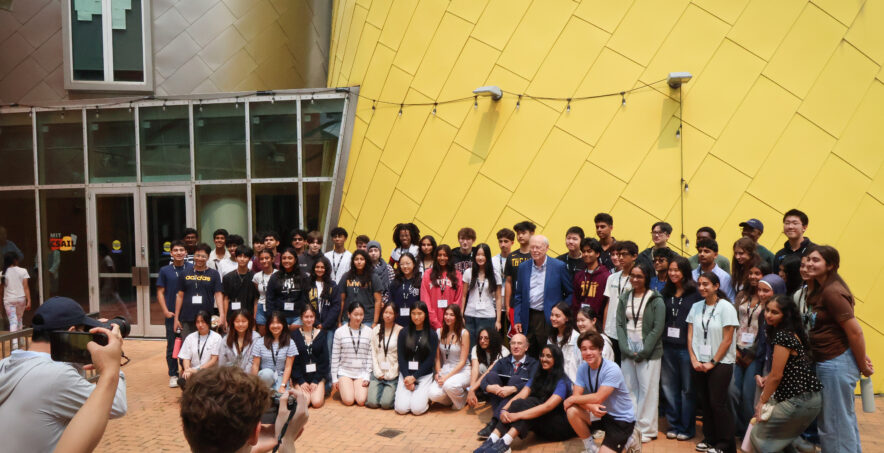
In July 2026, the MIT Jameel Clinic welcomed 58 high schoolers from across the U.S. and around the world to MIT campus for an immersive week exploring the intersection of artificial intelligence and medicine. This is the bootcamp’s fourth year since its inception in 2023.
Led by AI faculty lead Regina Barzilay, the bootcamp gave students a firsthand look at how machine learning is reshaping clinical care and drug discovery.
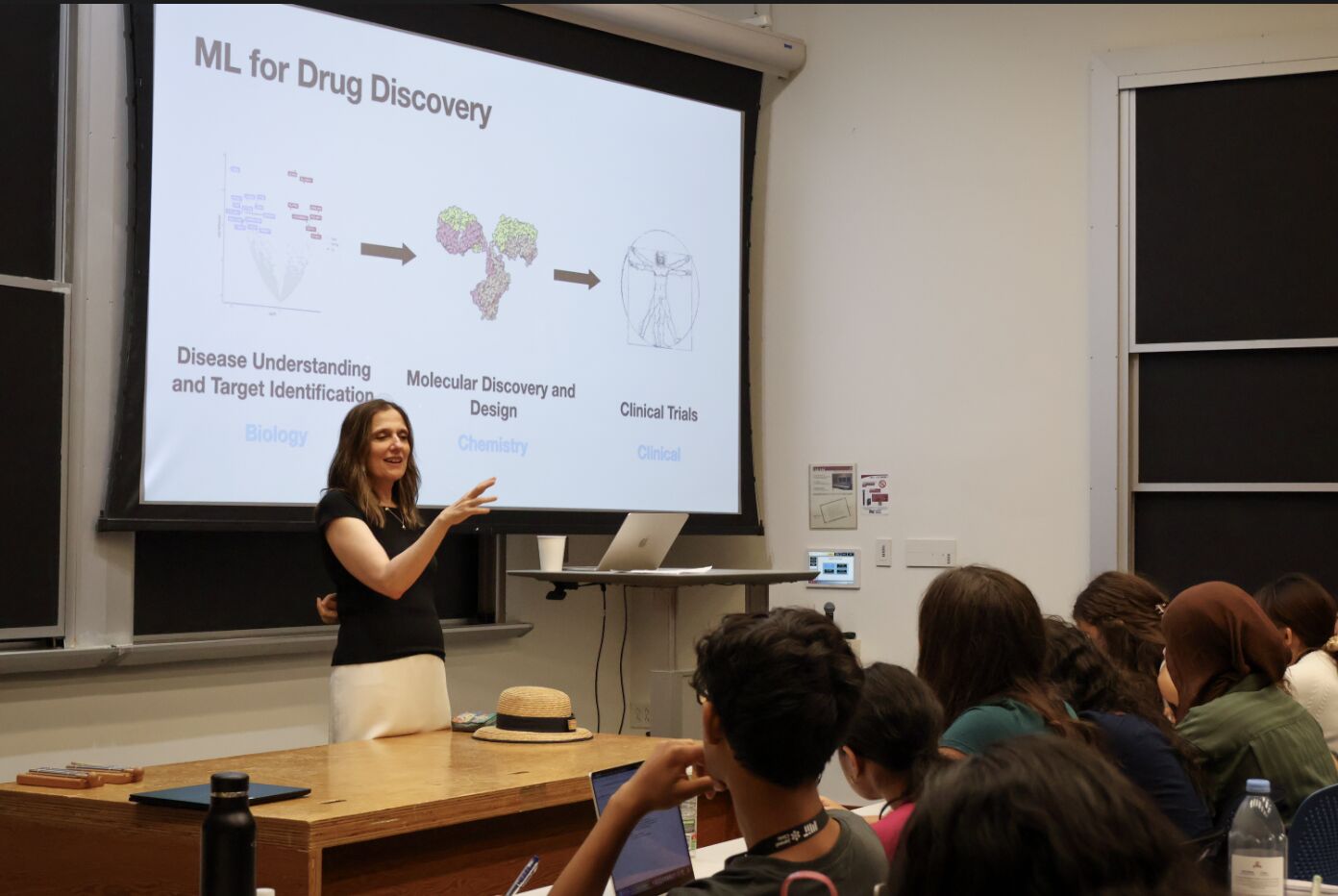
Students learned directly from the researchers driving this work. Jameel Clinic Chair and ’93 Nobel laureate Phillip Sharp spoke about the evolution of the biotech landscape over the years that started in Cambridge. Principal investigators Collin Stultz and Marzyeh Ghassemi introduced students to the clinical applications and ethical stakes of health AI, while Tom Pollard, director of PhysioNet, offered insight into the open datasets powering modern medical machine learning.
“This program caught my interest because it was focused very much on AI for social impact.” — Rea Rammuki
Coursework spanned a dedicated clinical AI course, a drug discovery course, and hands-on Python instruction, giving students both the technical foundation and domain context to engage with real research problems.
Beyond the classroom, the program brought its lessons into the real-world. A field trip to Massachusetts General Hospital’s historic Ether Dome connected students to the deep history of medical innovation in Boston, while a visit to Amgen offered a window into how AI and biotech intersect in industry drug development.
The week culminated in a final presentation and hackathon, where students had the opportunity to demonstrate leadership, teamwork, and what they’d learned about AI and health by developing their own models to address a health-focused research question of their choosing.
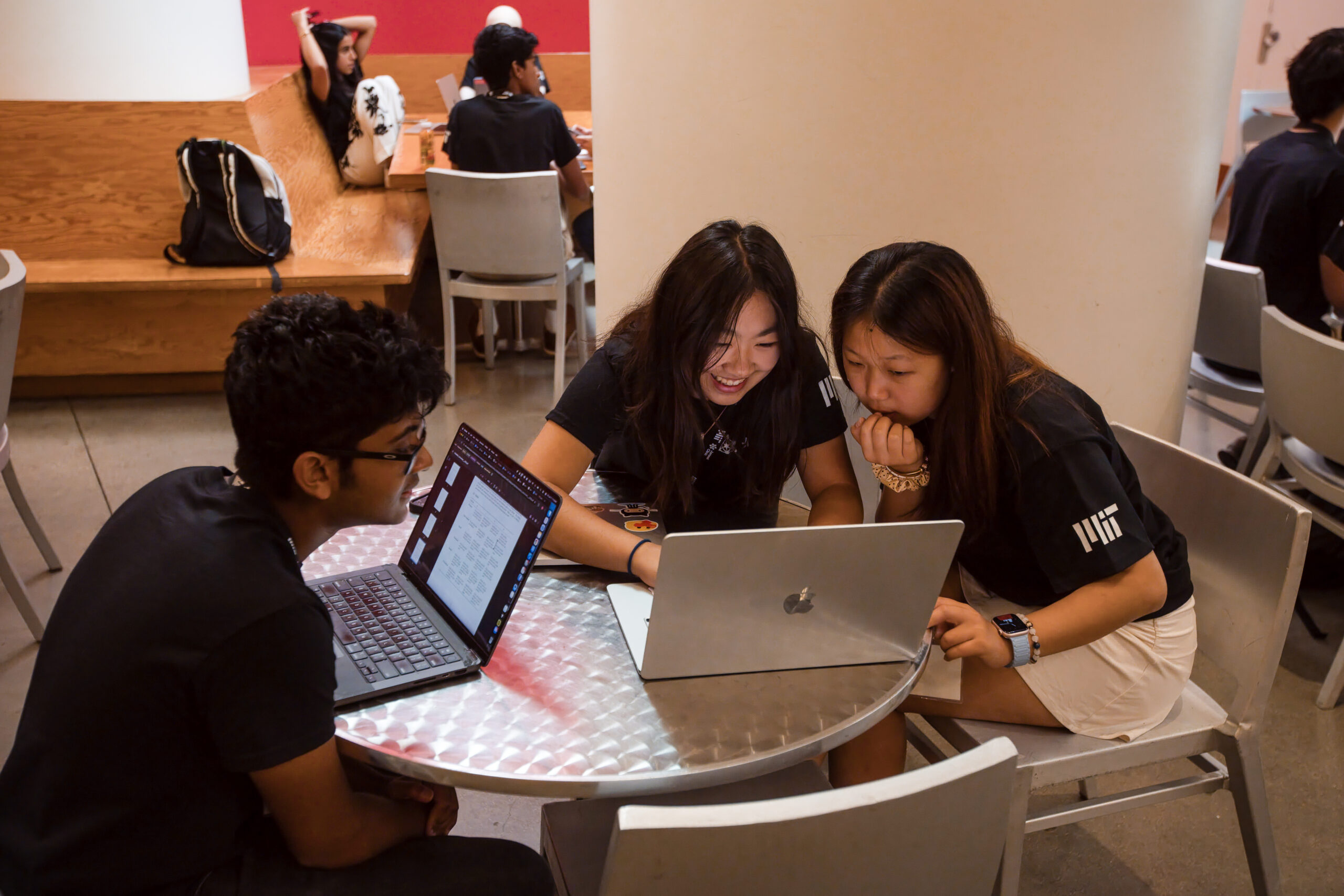
“This program caught my interest because it was focused very much on AI for social impact,” says Rea Rammuki, a rising 10th grader from South Africa. “I was expecting for my horizons to be broadened…MIT has certainly surpassed those expectations. I didn’t expect them to be broadened this much — they were talking about a bunch of different technologies that I couldn’t even fathom beforehand.”
Rammuki’s favorite sessions were Barzilay’s lecture on AI for breast and lung cancer risk prediction; Jake Yasonik’s Intro to Drug Discovery lecture, which demonstrated how machine learning methods were being used to help synthesize new molecules for fragrances and drugs; and the robotics demonstration on the reinforcement learning led by Venkie Venganallore Parsuramm and Khai Nguyen. “It made my heart race,” he adds. “That’s the best way to put it.”
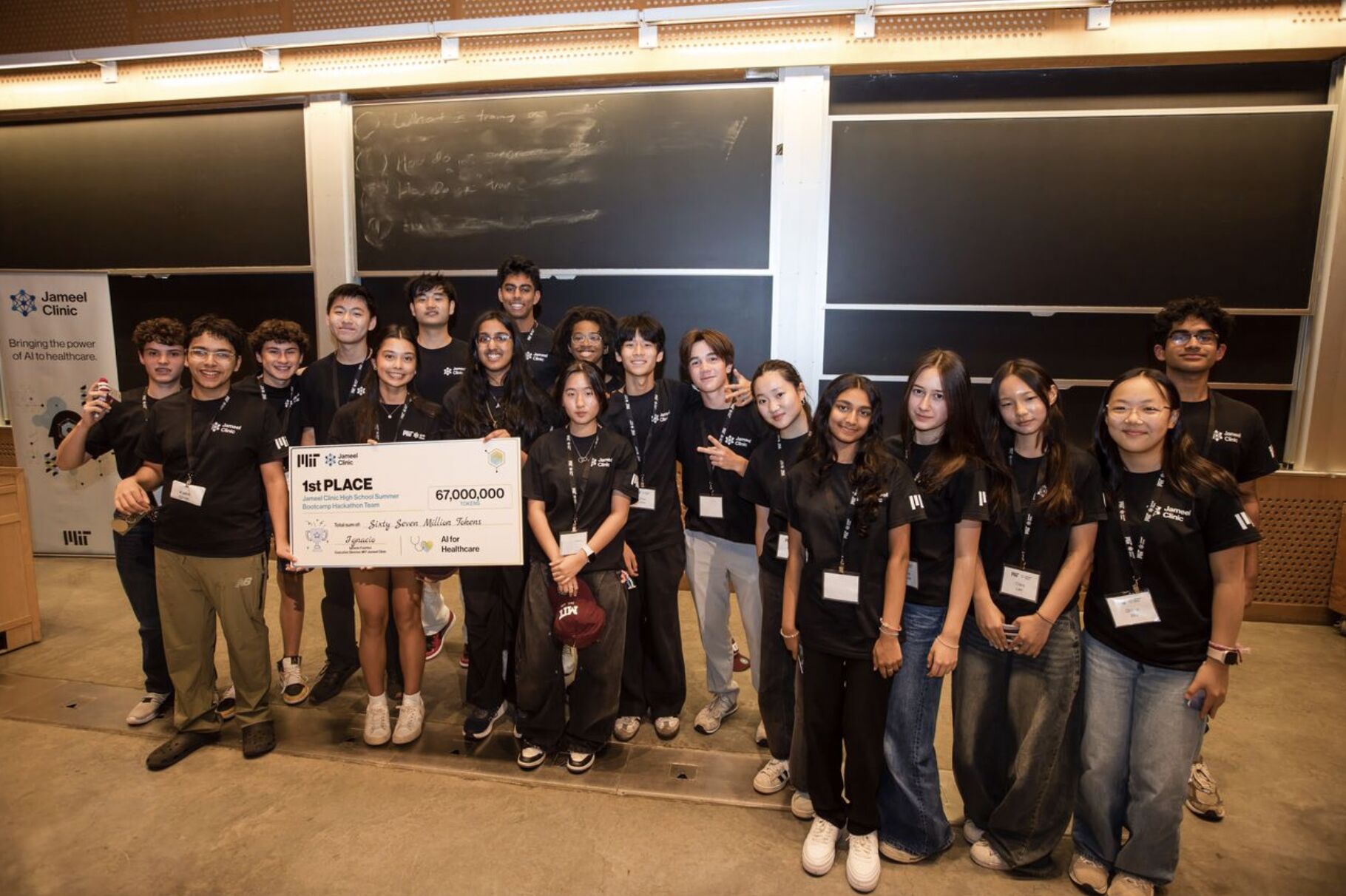
Congratulations to the top three hackathon teams!
1st place: Team 5 – Annabelle Racine, Rex Phillips, Rupert Webb, Saanvi Rangarajan, Sin-Yan Lai, Zeen Zhou
2nd place: Team 6 – Anay Shrotriya, Kabir Shah, Manuel Rodriguez, Mason Chang, Sebastian Reveiz, William Guo
3rd place: Team 7 – Advika Asthana, Ainslea Hong, Clara Lee, Grace Wu, Sophie Gsponer, Vaishnav Sudarshan
Applications for the 2027 edition of the bootcamp are now open. Students who are interested in applying can visit this page to learn more.
