President Yoon Suk Yeol of South Korea visited MIT on Friday, participating in a roundtable discussion with Institute leaders and faculty about biomedical research and discussing the fundamentals of technology-driven innovation clusters. Learn more
Researchers in Boston are on the verge of what they say is a major advancement in lung cancer screening: Artificial intelligence that can detect early signs of the disease years before doctors would find it on a CT scan.
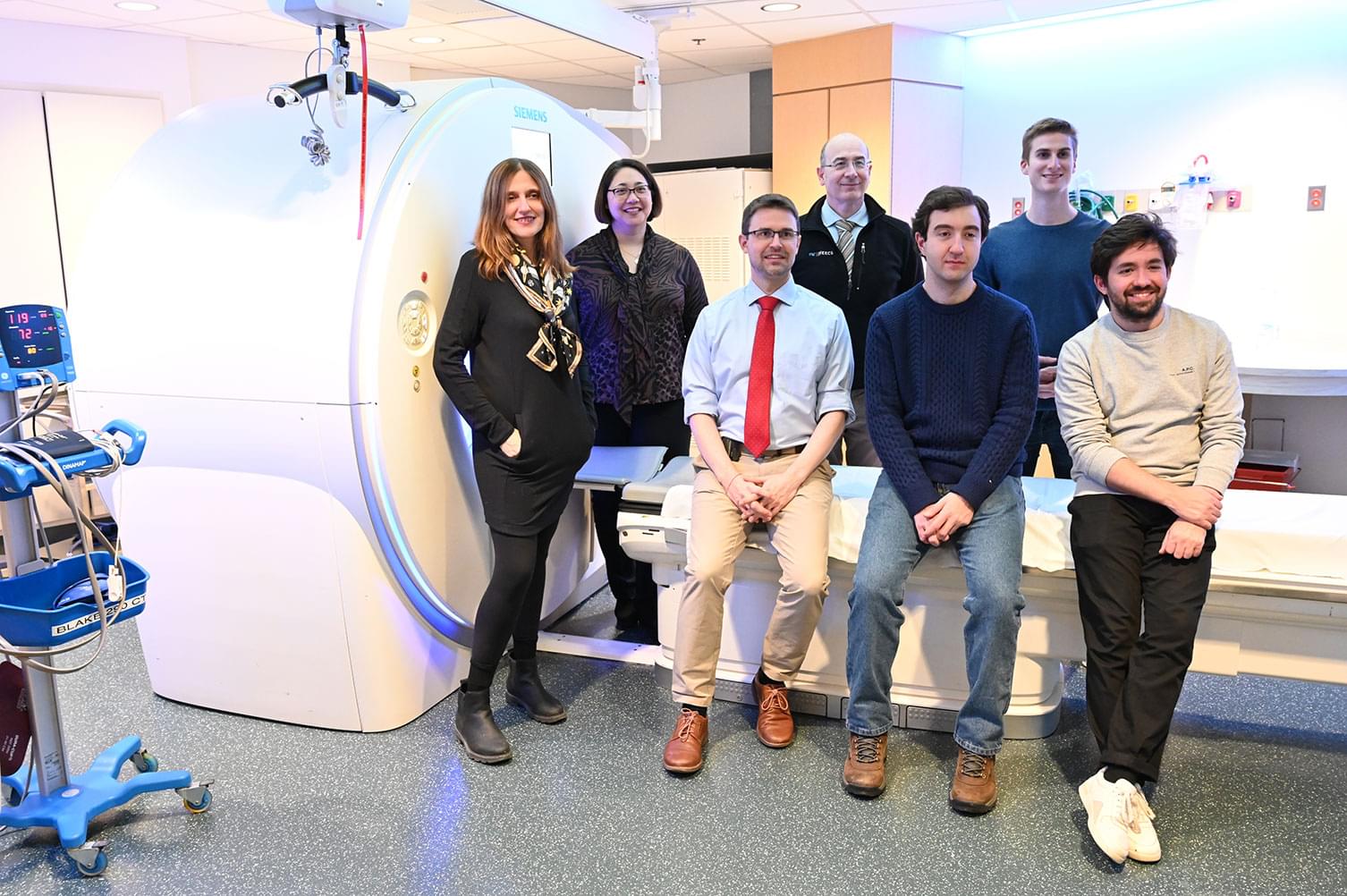
The new AI tool, called Sybil, was developed by scientists at the Mass General Cancer Center and the Massachusetts Institute of Technology in Cambridge. In one study, it was shown to accurately predict whether a person will develop lung cancer in the next year 86% to 94% of the time. Learn more
The name Sybil has its origins in the oracles of Ancient Greece, also known as sibyls: feminine figures who were relied upon to relay divine knowledge of the unseen and the omnipotent past, present, and future. Now, the name has been excavated from antiquity and bestowed on an artificial intelligence tool for lung cancer risk assessment being developed by researchers at MIT's Abdul Latif Jameel Clinic for Machine Learning in Health, Mass General Cancer Center (MGCC), and Chang Gung Memorial Hospital (CGMH). Learn more
The Jameel Clinic, the epicentre of artificial intelligence (AI) in healthcare at the Massachusetts Institute of Technology (MIT), hosted today a one-day conference titled ‘AI Cures MENASA: Clinical AI and data solutions for health’, in partnership with the UAE Artificial Intelligence Office, Community Jameel, and Wellcome. Held at the Jameel Arts Centre in Dubai, the conference was attended by H.E. Omar Sultan Al Olama, UAE Minister for Artificial Intelligence, Digital Economy and Remote Work Applications, and brought together pioneers in AI and health from the Jameel Clinic, including MacArthur ‘genius grant’ Fellows Professor Regina Barzilay and Professor Dina Katabi, Dr Adam Yala and Dr Shrooq Alsenan, a Jameel Clinic research fellow from Saudi Arabia, together with representatives from major hospitals and public health agencies across the Middle East, North Africa, and South Asia (MENASA) region. The conference marks the first international venture of ‘AI Cures’, the Jameel Clinic’s platform for collaboration that launched in the early months of the COVID-19 pandemic. Learn more
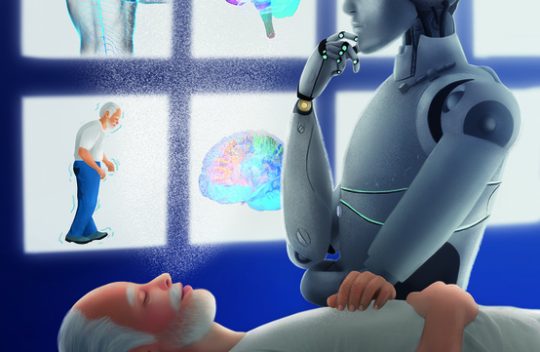
Parkinson’s disease is notoriously difficult to diagnose as it relies primarily on the appearance of motor symptoms such as tremors, stiffness, and slowness, but these symptoms often appear several years after the disease onset. Now, Dina Katabi, the Thuan (1990) and Nicole Pham Professor in the Department of Electrical Engineering and Computer Science (EECS) at MIT and principal investigator at MIT Jameel Clinic, and her team have developed an artificial intelligence model that can detect Parkinson’s just from reading a person’s breathing patterns.
Learn more
The entirety of the known universe is teeming with an infinite number of molecules. But what fraction of these molecules have potential drug-like traits that can be used to develop life-saving drug treatments? Millions? Billions? Trillions? The answer: novemdecillion, or 10^60. This gargantuan number prolongs the drug development process for fast-spreading diseases like Covid-19 because it is far beyond what existing drug design models can compute. To put it into perspective, the Milky Way has about 100 billion, or 10^11, stars. Learn more
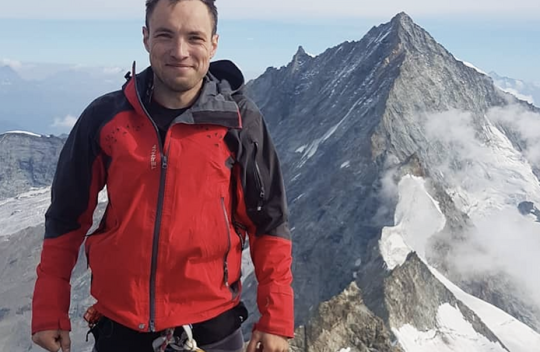
Octavian-Eugen Ganea, a gifted postdoctoral artificial intelligence researcher at the Abdul Latif Jameel Clinic for Machine Learning in Health (Jameel Clinic) and Computer Science and Artificial Intelligence Laboratory (CSAIL) passed away during a hike in French Polynesia on May 26. He was 34. Learn more
When Regina Barzilay returned to work after her breast cancer leave seven years ago, she was struck by an unexpected thought.
The MIT artificial-intelligence expert had just endured chemotherapy, two lumpectomies and radiation at Massachusetts General Hospital, and all the brutal side effects that come along with those treatments.
“I walked in the door to my office and thought, ‘We here at MIT are doing all this sophisticated algorithmic work that could have so many applications,’” Barzilay said. “‘And one subway stop away the people who could benefit from it are dying.’” Learn more
When artificial intelligence researcher Regina Barzilay was first diagnosed with breast cancer in 2014, she says she was struck by immediate questions: “Am I going to survive? What’s going to happen to my son?”
But soon, the Massachusetts Institute of Technology scientist began asking a broader one: Why couldn’t her cancer have been diagnosed earlier?
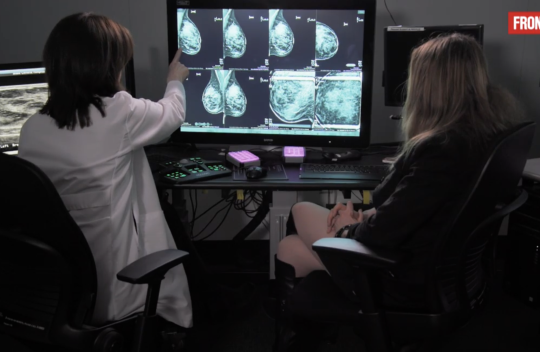
Barzilay’s quest to find an answer would lead to a remarkable result: the development of an AI-based system for early detection of breast cancer, with the ability to predict whether a patient is likely to develop the disease in the next five years. A technology that had not yet penetrated the hospital setting now has the potential to save many thousands of lives each year. Learn more