

Regina Barzilay Named to TIME’s Third Annual List of the TIME100 AI
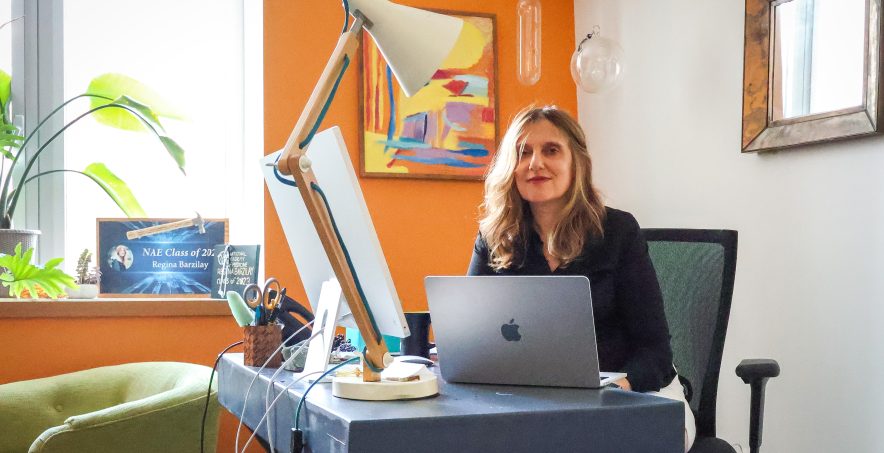
(Cambridge, Aug. 28) – TIME named MIT Jameel Clinic AI faculty lead Regina Barzilay to the 2025 TIME100 AI, a list recognizing the 100 most influential people in artificial intelligence.
To assemble the list, TIME’s editors and reporters examined the key stories in AI over the past year and consulted with expert sources and industry leaders for recommendations. The result is a list of 100 leaders, innovators, shapers, and thinkers who have a stake in the future of AI.
“It’s an honor to be recognized in the 2025 TIME100 AI list,” Barzilay said. “I hope the work we’ve done at MIT highlights how AI can positively contribute to society by transforming health outcomes for patients around the world.”
Early in her career, Barzilay was one of the leading computational linguists, earning her a 2017 MacArthur “Genius” Grant. But following her recovery from breast cancer, her work shifted from using AI to translate lost languages to developing AI models for predicting cancer risk and discovering new drugs.
This career pivot led her to team up with researchers at Mass General Hospital to develop a groundbreaking deep learning model called Mirai, which predicts breast cancer risk from a patient’s mammogram up to five years in advance. The model, released in 2019, is now being deployed in over 60 hospitals across the globe.
Following Mirai’s release, Barzilay immediately teamed up with another group of researchers at Mass General Hospital to develop a second groundbreaking risk prediction model called Sybil. Released in 2022, Sybil uses deep learning to predict 6-year lung cancer risk from a patient’s low-dose CT scan and is also being rolled out in hospitals worldwide.
Barzilay also joined efforts with MIT Jameel Clinic Life Sciences faculty lead Jim Collins to screen over 100 million molecules with AI to discover halicin, the first AI-discovered antibiotic. Their discovery, published in Cell in 2020, shook the scientific world by demonstrating that AI could be a viable tool for accelerating antibiotic discovery with a looming Antimicrobial Resistance Crisis and an anemic antibiotic pipeline.
More recently, Barzilay’s group oversaw the development of Boltz-1 and 2, the first open-source biomolecular structure prediction model to achieve AlphaFold3-level accuracy during a global race to release an open-source equivalent to AlphaFold3 for biomedical research and drug development.
See the full list here: time.com/time100ai
