

2026 AACR Annual Meeting Recap: MIT AI Leader Regina Barzilay Tapped for Opening Keynote
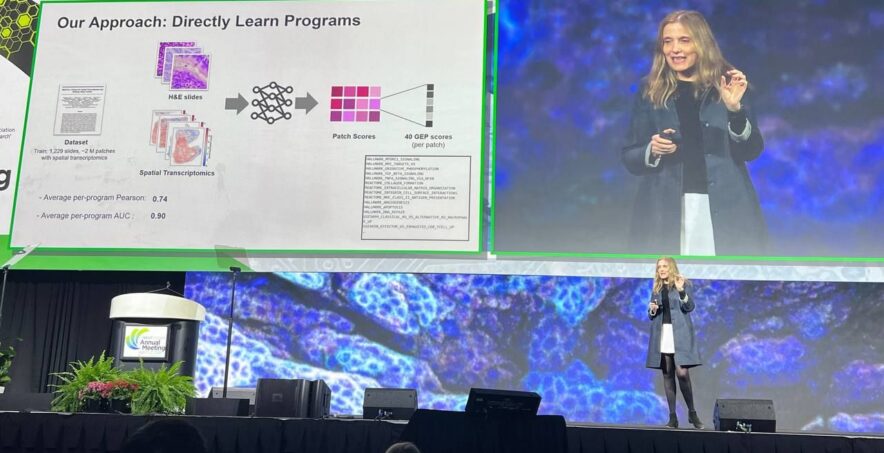
19 April 2026 — (San Diego) MIT Jameel Clinic AI faculty lead Regina Barzilay delivered a keynote address at the Opening Plenary of the American Association for Cancer Research (AACR) Annual Meeting, one of the world’s largest cancer conferences.
The plenary’s theme, “Precision, Partnership, Purpose: Advancing Cancer Science to Save Lives Globally,” was designed to “exemplify the breadth and overarching theme of the AACR Annual Meeting 2026” by spotlighting topics that are poised to transform cancer research and patient care.
“The Opening Plenary is always a highlight of the Annual Meeting, and this year, we wanted to feature trailblazing discoveries and some of the most cutting-edge technologies with the potential to transform cancer research and treatment,” said Alice T. Shaw, Chair of the Department of Medical Oncology and the Chief of Strategic Partnerships at Dana-Farber Cancer Institute as well as a Program Chair for the 2026 AACR Annual Meeting. “Regina Barzilay is at the forefront of applying AI to cancer medicine and has been leading seminal work in this field to enhance cancer treatment, detection, and risk assessment.”
Barzilay’s talk, titled “Rethinking Cancer Diagnosis and Treatment with AI: From molecular mechanisms to clinical management,” focused on new advancements in machine learning for drug discovery and early detection of cancer.
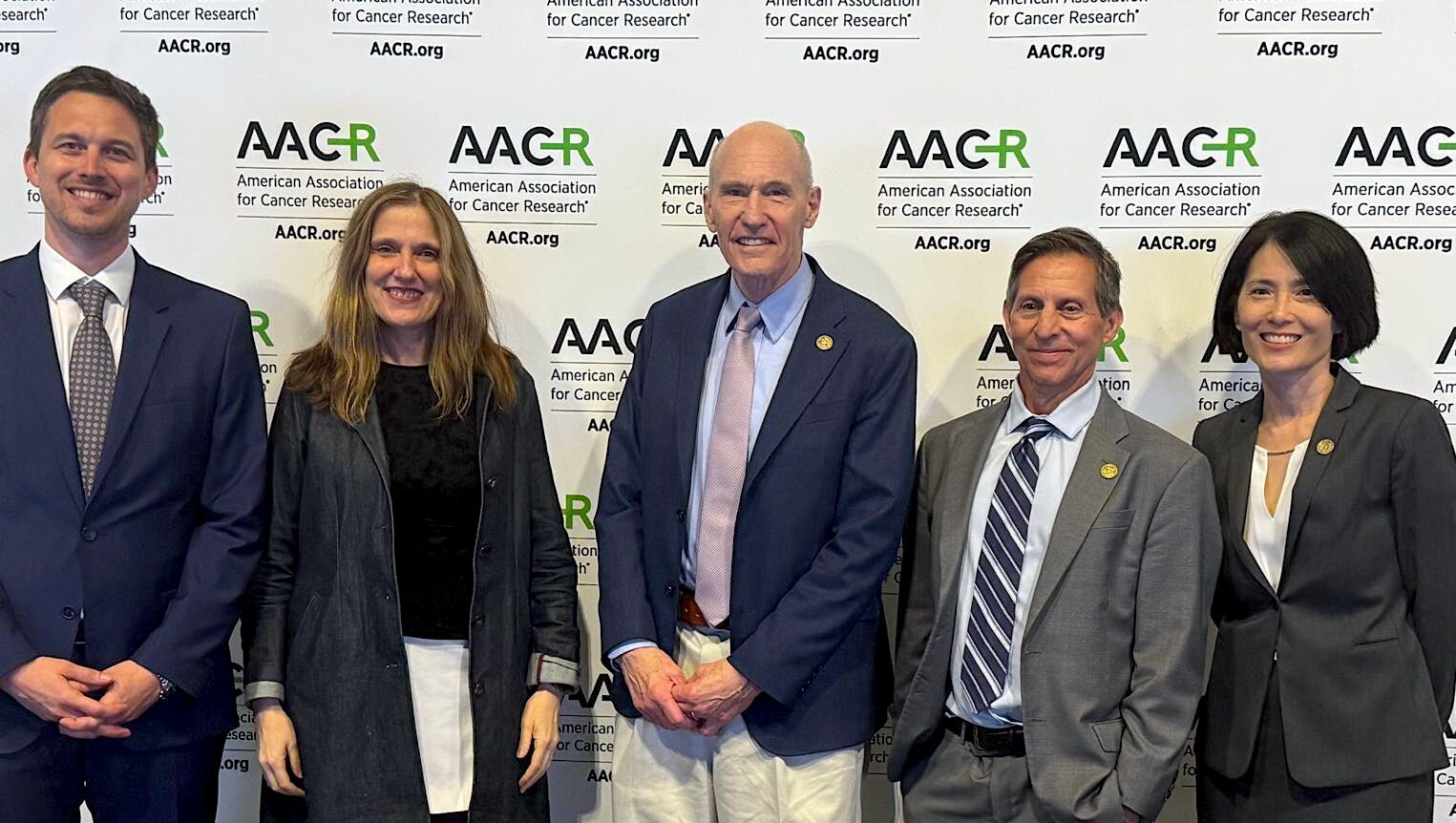
Left to right: Georg Winter of CeMM (Research Center for Molecular Medicine in Austria), MIT’s Regina Barzilay, University of Pennsylvania’s Carl H. June, along with AACR Program Chairs Paul S. Mischel (Stanford University) and Alice T. Shaw (Dana-Farber Cancer Institute).
Barzilay opened her session with an introduction to SPARC, a model that extracts molecular pathways from pathology images to help predict treatment responses across cancer types. She also demonstrated how her lab has been applying Boltz, a series of open-source biomolecular structure prediction and generation models that were developed in Barzilay’s lab, to optimize the selection of second-line treatments for patients with metastatic cancer, a project supported by ARPA-H. BoltzGen, released from Barzilay’s lab last year, is currently being used to help generate protein binders to design new therapeutics.
In the second half of her presentation, Barzilay addressed the persistent disconnect with advancements in AI-based risk stratification (such as Mirai, a 5-year breast cancer risk prediction model developed in Barzilay’s lab) and weak biomarkers, such as density, being used in clinical practice.
“I hope that one thing that everyone can take away from this talk is that AI can really make a difference in many ways when it comes to improving outcomes for patients with cancer,” Barzilay said. “Until very recently, most of the AI research really focused on radiology and pathology, which are extremely important, of course, but they definitely do not cover everything in cancer research and care.”
